
The Legendary Polish Saber: How the Szabla and Polish Swordsmiths Shaped European Warfare
When one thinks of medieval and early modern European warfare, images of knights with broadswords or heavy cavalry with lances often dominate the imagination. Yet, between the 16th and 18th centuries, a single weapon revolutionized the battlefields of Eastern and Central Europe—the Polish szabla, a curved saber that blended Eastern agility with European craftsmanship.
This was more than a weapon. The szabla symbolized power, national identity, and military innovation. Combined with Poland’s unique koncerz (a long thrusting sword carried alongside the saber), the szabla gave the Polish-Lithuanian Commonwealth’s famed winged hussars their legendary edge in warfare. But behind these weapons stood another hidden force: Polish swordsmiths, craftsmen whose mastery rivaled and often surpassed their counterparts in Turkey, Hungary, and Persia.
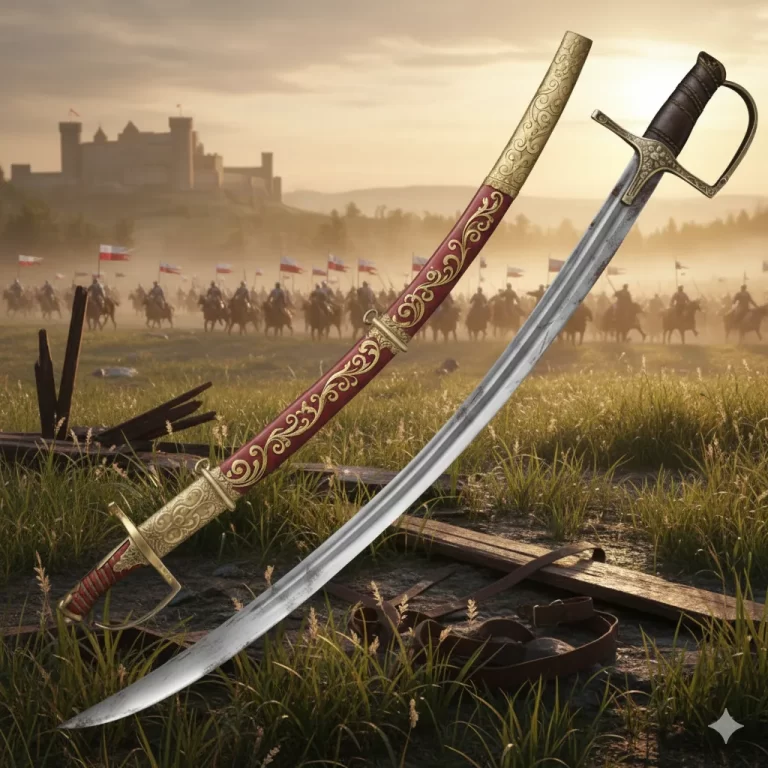
From East to West: The Birth of the Szabla
The curved saber was not originally Polish. Its design flowed into Europe from the East, carried by Turkic and Persian warriors. The Ottoman kilij, the Persian shamshir, and the Hungarian szablya all emphasized a single design principle: a curved blade ideal for lightning-fast slashing from horseback.
Poland, caught at the crossroads of East and West, absorbed these influences. By the late 16th century, the Polish szabla had emerged as a distinct weapon—lighter than the Hungarian version, more versatile than the Persian, and more practical for European cavalry tactics. Unlike the heavier straight swords of Western Europe, the szabla allowed mounted knights to strike and recover in fluid motions.
Why the Szabla Dominated European Warfare
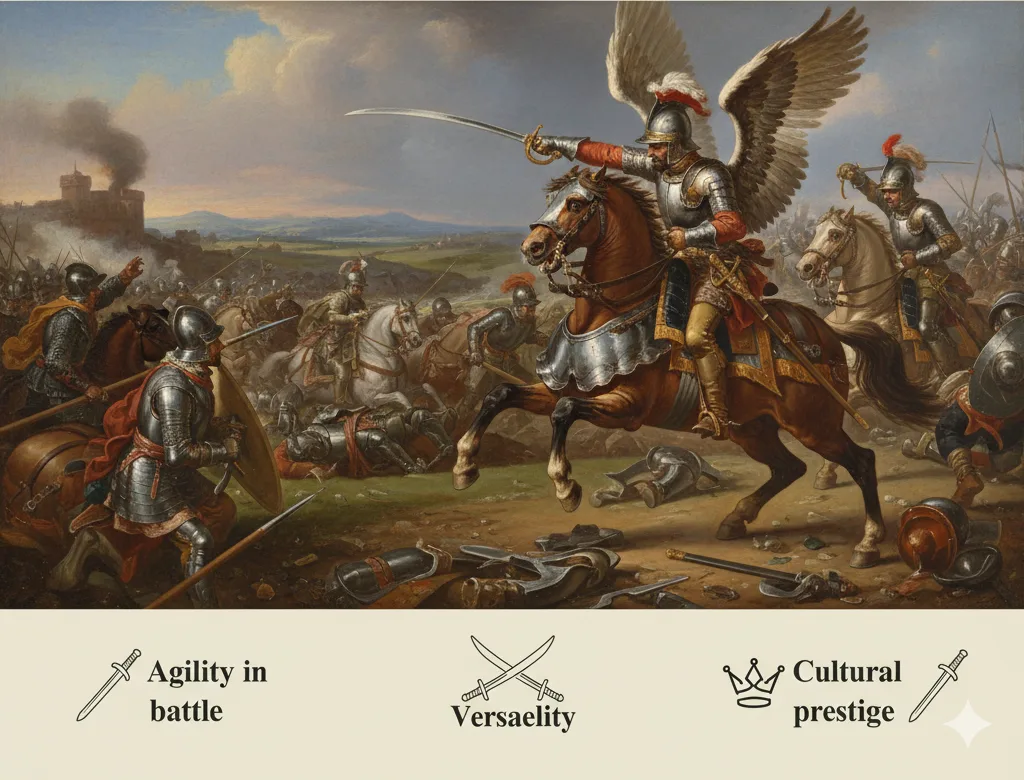
The rise of the winged hussars, Poland’s elite heavy cavalry, known for their deadly attacks that frequently broke armies several times their size, were inseparable from the szabla. The szabla was the key to their success:
- Agility in battle – Its curved blade allowed slashing attacks without losing momentum, crucial for mounted warriors.
- Versatility – Equally effective against armored opponents and unarmored infantry.
- Cultural prestige – The szabla was not just a weapon, but also a symbol of Polish nobility and status.
Paired with the koncerz, a long thrusting sword capable of piercing plate armor, Polish knights enjoyed a dual-weapon system unmatched by most European armies. This combination was devastating—one blade for cutting, the other for stabbing through defenses.
Victories Forged in Steel
The effectiveness of Poland’s sabers was tested in countless battles. The most famous came in 1683 at the Battle of Vienna, when King John III Sobieski and his winged hussars charged into Ottoman ranks, breaking their siege of the city and turning the tide of European history.
Chroniclers noted how the curved sabers of the hussars ripped through Turkish formations, their reach and cutting power superior in close combat. Without the szabla, the outcome of Vienna—and perhaps the fate of Europe—may have been very different.
Other victories, such as the battles of Kłuszyn (1610) and Chocim (1621), further cemented the weapon’s reputation. The szabla was not just a Polish innovation; It played a pivotal role in shifting the continent’s military balance.
Comparing the Great Sabers: Polish vs. Turkish, Hungarian, Persian
- Turkish Kilij – Known for its pronounced curve and sharp tip, ideal for cutting flesh. Deadly in the Ottoman cavalry but less suited for armored foes.
- Persian Shamshir – Elegant and razor-sharp, perfect for slicing but fragile against heavier European armor.
- Hungarian Szablya – The direct predecessor of the Polish saber, heavier but influential in shaping Poland’s adaptation.
- Polish Szabla – Struck a balance: curved but sturdy, versatile against armored and unarmored targets, and easily adapted into military drill.
This adaptability explains why by the 17th century, the Polish szabla became a model for cavalry weapons across Europe, influencing sabers in Germany, Austria, and even France.
The Forgotten Masters: Polish Swordsmiths
The Polish swordsmiths, whose names were rarely mentioned in history, were the craftsman behind every successful charge. The real war engineers were these artisans. Working in workshops in Kraków and Lwów as well as along the Commonwealth’s trade routes, they combined European metalwork and Eastern manufacturing methods.
Innovation In MetalWorking
Polish smiths created blades with a balance between hardness and flexibility to avoid breaking in battle.
Design Improvement
The szabla’s protective crossguards, decorative hilts, and useful curvature made it both stylish and deadly.
Mass Prestige
Unlike Western Europe, where swords were mostly military tools, Polish szable became symbols of nobility, worn at ceremonies, duels, and even weddings.
Polish artisans frequently added heraldic symbols, engravings, and gold inlays to blades that were specially made for individual aristocrats. The szabla was transformed from a weapon to an heirloom that was handed down through the generations as a symbol of prestige and familial pride thanks to these additions.
However, more well-known cities like Toledo or Damascus continue to overshadow Polish swordsmiths in spite of their impact. In actuality, they were some of Europe’s unsung heroes, influencing a country’s military course.
Legacy of the Szabla
By the 18th century, Polish identity was forever linked to the szabla. Polish officers and cavalry continued to use the saber as their preferred sidearm even as firearms became more common. Its impact extended westward, influencing the light cavalry sabers used by Prussian uhlans, Napoleonic armies, and even cavalry over the Atlantic in the 19th century.
European art was also influenced by the craftsmanship. Polish sabers that have survived have displayed not just military effectiveness but also fine craftsmanship, with engraved blades, gilded scabbards, and ivory or silver-adorned hilts. These weapons were both symbolic in society and useful in the battlefield, reflecting Poland’s dual military culture.
The szabla is now remembered as a cultural item as well as a weapon, having been engraved, gilded, and kept in museums in Warsaw, Kraków, and other places. Its curved form narrates how Poland refined an Eastern-designed weapon, changing the face of warfare in Europe.
Conclusion: Steel That Shaped History
A story of Europe at a turning point is the tale of the Polish szabla. Originating in the East, it was honed in the Commonwealth and exported westward, serving both a weapon of war and a status symbol. It secured Poland’s position as a military superpower and provided the winged hussars with an advantage alongside the koncerz.
However, as important are the unsung heroes who crafted these blades: Polish swordsmiths, the masters who combined skill and deadly force to produce some of the best weapons in European history.
In the end, the szabla is more than a saber. It is a reminder of how craftsmanship and innovation can change the fate of nations—and how a single blade, perfected by Polish smiths, left its mark on centuries of European warfare.
Which Cavalry Saber Defines Your Style?
From the elegance of the Persian shamshir to the power of the Turkish kilij and the versatility of the Polish szabla, each blade reflects a different philosophy of warfare and craftsmanship.
Compare historically inspired saber designs and find the one that resonates with your collection, reenactment, or personal interest.
 Explore our saber collections and discover your ideal cavalry blade.