Doon Handicrafts

Roman Army Formation And Soldier Ranks

Roman Army Formations and Soldier Ranks: A Complete Guide

The Roman army formations is remembered as one of history’s greatest military forces, admired for its unmatched discipline, innovative formations, and precise hierarchy. From the early Republic to the mighty Empire, Rome’s legions conquered vast lands, secured borders, and maintained peace across territories stretching from the Mediterranean heartlands to the deserts of North Africa and the frontiers of the Near East.

What made the Romans extraordinary was not just their bravery but their organization, tactics, and ranks of command. Every soldier, from the humble legionary to the powerful general, had a defined role in ensuring Rome’s dominance. This blog takes you inside the Roman army formations, the ranks of soldiers and generals, and the discipline that forged an empire.

Overview of the Roman Army

Unlike many ancient forces that relied on brute strength, the Ancient Roman army formations functioned like a well-oiled machine. It was an institution where training, loyalty, and hierarchy mattered as much as weaponry. Rome’s military strategy placed a strong emphasis on adaptability— allowing legions to fight across deserts, forests, mountains, and plains with equal effectiveness.

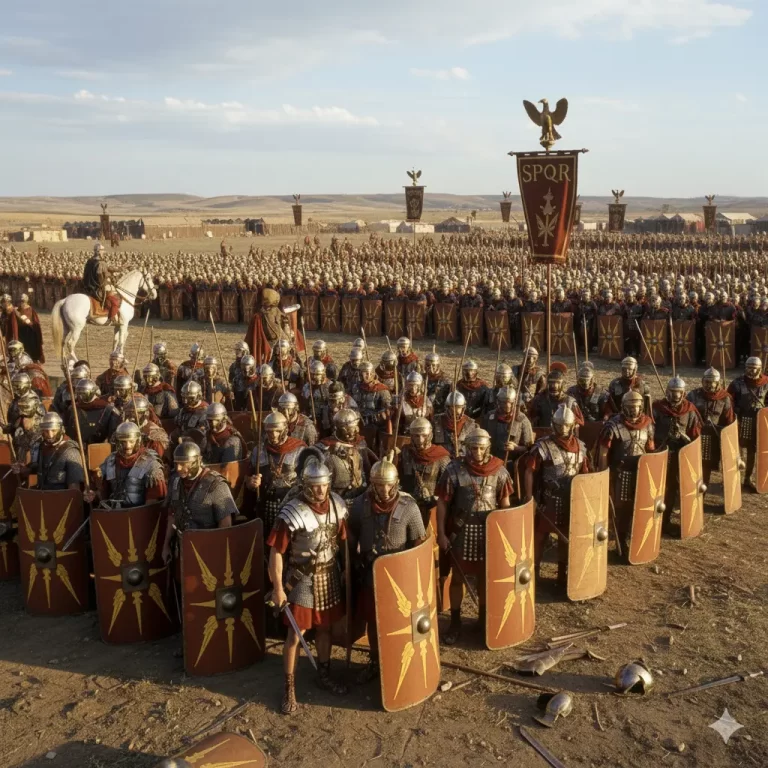
At its core, the Roman army was divided into legions. Each legion had between 4,000 and 6,000 soldiers, broken into smaller units for efficiency. Rome was able to defend its wide borders and project influence well beyond its city walls because to this strategy.

Roman Army Formation

Battlefield formations were Rome’s greatest strength. These tactical arrangements gave them both defensive resilience and offensive power, ensuring their survival in countless battles.

The Legion: Backbone of Roman Army Formations

The legion was the largest unit of the Roman army. Its careful structure made Roman army formations highly disciplined:

  • Cohorts: Ten per legion, each with around 480 men.
  • Centuries: Each cohort divided into six centuries of 80 men, led by a centurion.
  • Contubernia: Small squads of eight men who lived, trained, and fought together.

This hierarchy made it possible for orders to travel from the top general down to the lowest soldier without confusion.

Famous Ancient Roman Army Formations

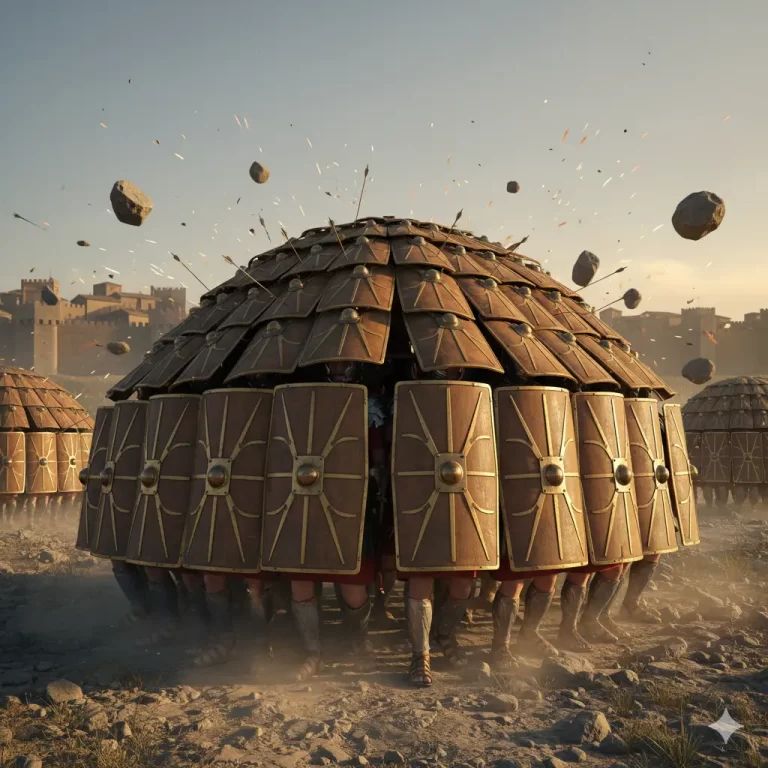
Testudo (Tortoise Formation)

Perhaps the most iconic, Soldiers in the testudo formation connected their massive rectangular shields on all sides and overhead to form a defensive shield wall. This created a protective shell against arrows and stones, making it invaluable during attack

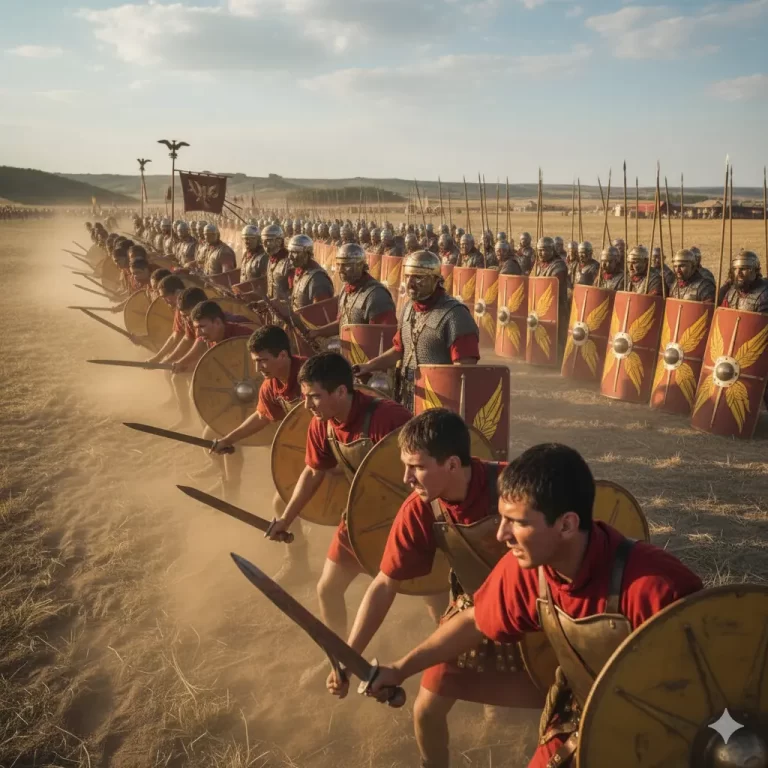
Wedge Formation

When Romans needed to break through enemy lines, they relied on the wedge formation. Troops were positioned in a triangle to break down and break enemy formation.

Roman Army Formations Wedge Formation

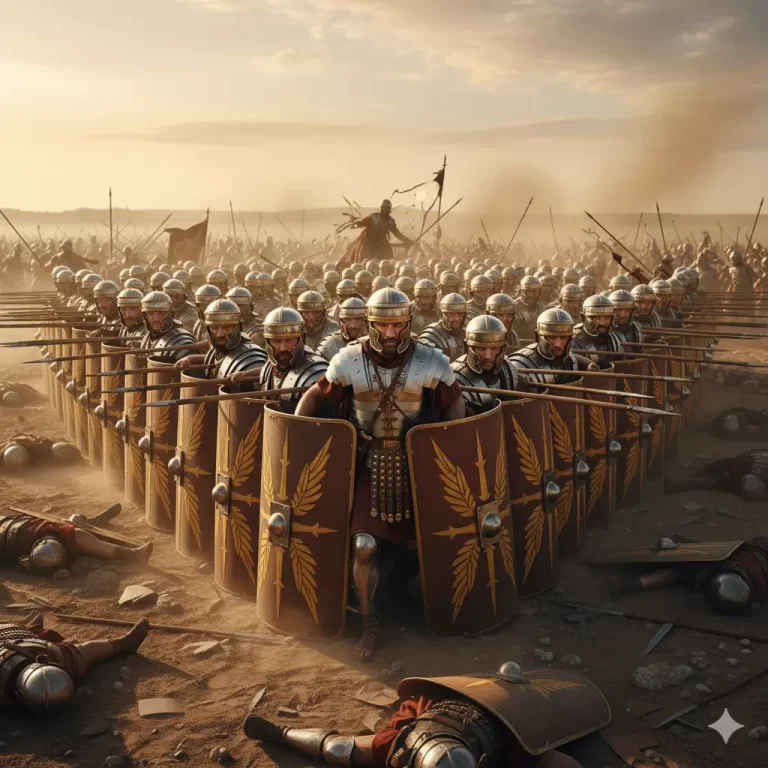
Triplex Acies (Triple Battle Line)

The triplex acies was a layered strategy where troops were arranged in three lines:

Hastati:Young, passionate newcomers who engaged in combat first.

Principes: Second line soldiers with experience and proper equipment.

Triarii: Toughened veterans who serve as the last line of defense and are only called upon in emergencies.

This ensured Rome’s army had depth, resilience, and the ability to respond flexibly to battle conditions.

Roman Army Formation Triplex Acies Formation

Ranks of Soldiers in the Roman Army

The Roman army formation was defined by its ranks. Each rank carried responsibilities, ensuring that the army worked as a unit.

Common Soldiers

  • Legionaries: The professional Roman soldiers who formed the army’s backbone. Armed with the gladius (short sword), pilum (javelin), and large shields, they fought with discipline and skill.

  • Immunes: Soldiers with specialized skills — engineers, surveyors, blacksmiths, and medics. They were exempt from some duties due to their technical expertise.

  • Principales: Junior officers, often chosen from skilled legionaries, who assisted in administration and minor command roles.

Junior Officers and Centurions

  • Centurion: Perhaps the most vital rank in the army, commanding 80 soldiers in a century. Centurions enforced discipline, led from the front, and were respected for bravery and toughness.

  • Optio: Deputy to the centurion, ensuring orders were executed and ranks maintained.

  • Signifer: The standard-bearer, carrying the unit’s emblem. The signifer’s role was both symbolic and practical, acting as a rallying point in battle.

Tesserarius: Managed camp security and passwords, critical for safety and communication.

Senior Commanders and Generals

  • Tribunes: Mid-level officers often drawn from the aristocracy, handling administration and sometimes leading detachments.

  • Legatus Legionis: The commander of a legion, usually a senator appointed by Rome. He was responsible for strategy, logistics, and overall leadership.

  • Dux / Imperator: Generals in charge of multiple legions. The title imperator was often bestowed after great victories and eventually evolved into the imperial title “emperor.”

Consuls and Proconsuls: Political leaders who could assume command in major campaigns, blending political and military authority.

Auxiliary Soldiers

Beyond Roman citizens, the army also relied heavily on auxiliaries. These were non-citizen troops who brought unique skills such as cavalry, archery, and slinging. Serving for 25 years earned them citizenship, making auxiliaries a loyal and critical part of Roman success.

The Discipline That Defined Rome

What truly distinguished the Roman army was its discipline and order. Soldiers trained relentlessly, marching long distances in full armor, building camps every night, and drilling in formations Until they became instinctive.

Centurions ensured that soldiers respected hierarchy and punished disobedience harshly. Yet discipline also bred loyalty: men trusted their officers to lead courageously and make decisions that secured victory.

Duty, unity, and obedience are the three pillars of the Roman military culture, which made sure that legions never broke under pressure.

Legacy of the Roman Army

The Roman army’s impact continues to shape the modern world. Many principles we see in today’s armed forces — strict chain of command, specialized roles, professional training, and unity of the organization — have their origins in Rome.

The formations such as the testudo and triplex acies reveal their tactical brilliance, while the ranks — from the humble legionary to the powerful general — show how structure and leadership secured Rome’s supremacy.

Studying the Roman army formation and ranks is not just about ancient battles. It’s about understanding how strategy, organization, and discipline can transform societies and sustain empires.

Roman Army Formation Legacy Of Roman Army

Conclusion

The Roman army was more than a military machine — it was the backbone of an empire. “The Roman army formations show how structure, tactics, and discipline transformed men into a force capable of shaping the world.” Its success came from a balance of formation tactics, soldier ranks, and discipline. The legion’s structure, the iconic testudo formation, the triplex acies, and the strict hierarchy from legionaries to generals all reveal how Rome built a force that endured for centuries.

For students of history, leaders, and strategists alike, the Roman army remains a timeless example of how vision, discipline, and organization can turn men into a force capable of shaping the world. “Studying ancient Roman army formations provides timeless lessons for leaders and strategists alike.”

Experience the Discipline and Power of Rome

The Roman army was built on structure, precision, and battlefield innovation. From the gladius and pilum to shields that formed the legendary testudo, every piece of equipment reflected a system designed for victory and dominance.


Explore our historically inspired Roman weapons, armor, and shields to see how ancient strategy and craftsmanship come alive through modern manufacturing.


👉 Discover our Roman and ancient warfare collection and bring history into your hands.