The Sword Forges of the American Civil War: Makers’ Marks, Survivors, and Why They Mattered
American Civil War Swords represent one of the most studied categories of 19th-century military edged weapons. The American Civil War (1861–1865) turned U.S. swordmaking from a boutique craft into a wartime industry. Government demand, private contracts, and international sourcing created a mixed ecosystem of northern forges, southern workshops, and imported blades. This article examines who was producing edged weapons in 1861–1865, how to read makers’ marks on surviving examples, why certain makers’ pieces dominate museum and collector holdings today, and three practical recommendations for curators, collectors, and reenactment suppliers.
Beyond battlefield utility, swords during this period carried symbolic authority. Officers’ swords in particular functioned as visual markers of rank, discipline, and institutional identity. Even as rifled muskets and artillery defined combat lethality, edged weapons retained ceremonial and tactical roles in cavalry engagements and close-quarter fighting. The result was a dual demand curve: practical sabers for mounted troops and ornate presentation swords for commissioned officers. That bifurcation shaped how forges allocated capacity standardized patterns for volume, embellished pieces for prestige directly influencing which American Civil War Swords examples survive in the strongest condition today.

Industrial Scale and the Top Makers: North vs. South
When war began, the federal government lost access to southern arsenals and quickly leaned on established northern firms that could scale. The single most consequential supplier for the Union was the Ames Manufacturing Company, which produced regulation sabers, officer swords, and artillery sidearms in large numbers from its Chicopee (Cabotville) plant. Ames benefited from integrated foundry capacity and long experience in military contracts factors that made their output consistent, marked, and therefore easy to identify later in surviving American Civil War Swords collections.
In contrast, the Confederacy did not have large, well-organized factories like the North. Instead, they used a combination of captured Union weapons, swords imported from England through blockade runners (especially Enfield-style sabers), and smaller local workshops across the South. These companies sometimes stamped their blades or parts with identifying marks that can still be seen today. However, compared to northern manufacturers, their production numbers were much lower and their designs were less standardized. Many surviving examples of American Civil War Swords from the South show greater variation in finish and construction.
Operationally, this divergence created two manufacturing archetypes. The Union side optimized for throughput and interchangeability, while Confederate producers optimized for adaptability under scarcity. Metallurgical consistency, access to rolled steel, and transportation infrastructure in the North translated into repeatable heat-treatment outcomes. In the South, inconsistent raw materials occasionally resulted in variation in blade hardness and finish factors now used by specialists to differentiate authentic southern manufacture from later reproductions of a civil war saber.
Scale mattered. Integrated factories that combined casting, forging, and finishing lowered unit cost, standardized patterns, and produced consistent maker stamps the reason Ames-produced pieces are well-represented in museum collections and academic studies focused on American Civil War Swords.
Makers’ Marks: Reading Identity, Contract, and Date
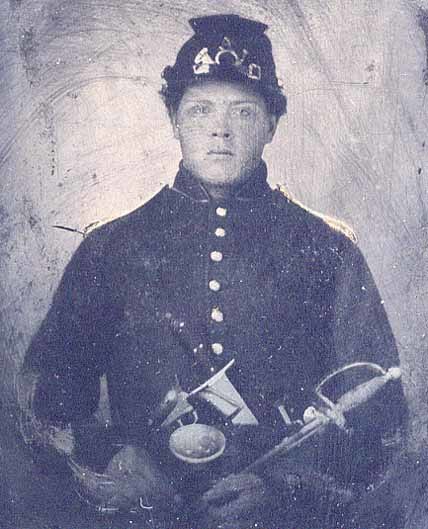
Surviving Civil War swords often carry four kinds of marks: (1) manufacturer name and location, (2) government inspector or “U.S.” stamps, (3) date marks on the ricasso, and (4) regimental or presentation etchings. Understanding how these appear and interact allows historians and collectors to authenticate and contextualize pieces with greater precision, particularly when studying Civil war swords makers marks in detail.
Typical Marks and Where to Find Them
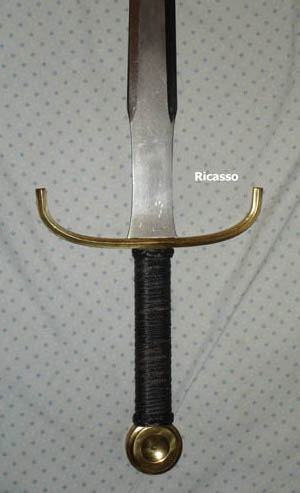
Ricasso stamps (blade shoulder):Numerous Ames items include the stamp “AMES” or “AMES MFG. CO. These are the first thing professionals look at and are frequently found on Model 1840 and Model 1860 cavalry sabers. These stamps are central when analyzing Civil war swords makers marks, especially on an original civil war saber.
U.S. government marks and inspectors: Federal issuance swords were often punched with an inspector’s initials and a small “U.S.” a key sign of government contract issue. These official markings remain critical evidence in identifying authentic American Civil War Swords.
Southern and import marks: Although many Confederate soldiers carried English sabers that were either confiscated or imported with British maker marks rather than Southern ones, Confederate domestic producers like Cook & Brother occasionally marked their blades or fittings. Interpreting these variations requires close study of Civil war swords makers marks, especially when evaluating a rare civil war saber of Southern origin.
Common Pitfalls in Mark-Based Attribution
Partial stamps: Corrosion or polishing can obscure letters, making it difficult to read Civil war swords makers marks accurately.
Regrinds and restorations: Later cleaning may erase original evidence. Over-polished blades often reduce the historical clarity of a civil war saber.
Imported blades with later fittings: Blade and hilt provenance may differ, complicating authentication of American Civil War Swords.
A disciplined authentication approach correlates blade curvature, fuller dimensions, grip wrapping style, and scabbard throat construction against known ordnance specifications. Advanced collectors increasingly use non-invasive metallurgical analysis to validate steel composition without damaging the artifact, reinforcing historical attribution with scientific data and strengthening conclusions drawn from Civil war swords makers marks.
Surviving Pieces Today: Museums, Private Collections, and the Market
A review of documented surviving swords reveals three dominant patterns.
High-survival institutional examples. Standard-issue swords produced in large quantities are abundant in museum collections because of their scale of manufacture and documented procurement records. Officer presentation swords and contract sabers from major northern firms frequently appear with detailed provenance.
Regional rarities. Identifiable southern-made swords are rarer due to limited production capacity and record fragmentation. When authenticated examples surface, they command significant collector interest because of scarcity and historical context.
Imported and foreign-manufactured swords. The Confederacy imported substantial quantities of British blades, many bearing Solingen or Birmingham maker marks. These pieces often demonstrate high-quality steel and refined finishing, reflecting Europe’s established blade-making traditions.
Market valuation today reflects documentation density. Pieces with intact scabbards, legible stamps, and traceable regimental ownership histories trade at significantly higher levels than anonymous examples. Condition grading standards original wire wrap, untouched patina, matching serial numbers drive price multiples in both auction and private treaty sales.
Why Certain Makers Stood Out
Three structural advantages explain why some forges remain central to Civil War sword scholarship and collecting.
1. Vertical integration and quality control. Firms like Ames maintained tighter tolerances and consistent finishing standards, producing blades that were both durable and clearly attributable.
2. Government contracting and standardization. Regulation patterns such as the Model 1840 Cavalry Saber and the Model 1860 Cavalry Saber enforced production consistency and recognizable design features.
3. Supply-chain advantages. Northern access to iron, transportation networks, skilled labor pools, and capital markets drove predictable output. Southern scarcity limited scalability but produced distinctive regional variations.
Over time, documentation amplified reputation. Firms whose archives survived production logs, inspection sheets, delivery manifests became easier to study, cite, and authenticate. This archival advantage compounds modern recognition, explaining why certain names dominate both scholarship and collector discourse.
Authentication Checklist
When assessing a purported Civil War sword, apply this structured framework:
Blade ricasso stamp.
Inspector or “U.S.” marks.
Model conformity (hilt, guard, grip alignment with regulation patterns).
Metallurgical consistency and period-correct construction techniques.
Provenance documentation.
Whenever possible, triangulate physical evidence with period ordnance manuals and procurement reports preserved in archival repositories.
Closing: The Value of Durable Provenance
Swords from the American Civil War are more than steel artifacts; they are industrial data points embedded in national history. Makers’ marks function as durable identifiers linking battlefield deployment to factory floors in Massachusetts, Georgia, and abroad. They represent the intersection of industrialization, military logistics, and craftsmanship during one of the most transformative periods in American history.
Discover Civil War Swords Built on Research, Not Guesswork
Understanding makers’ marks, contracts, and manufacturing history is essential when evaluating historical swords. Authenticity depends on documented typologies, correct construction, and period-accurate materials not just visual similarity.
At Doon Handicrafts, our Civil War–inspired sabres and officer swords are developed using archival references, museum collections, and regulation patterns to ensure accuracy and credibility for collectors, reenactors, and institutions worldwide.
 Explore our historically inspired American Civil War sword collection and compare designs based on real military specifications.