Doon Handicrafts

The Cavalry Over Katana

The Cavalry Over Katana? Japanese Cavalry Sabres in WWII - Types, Construction, and Why the Army Chose Them

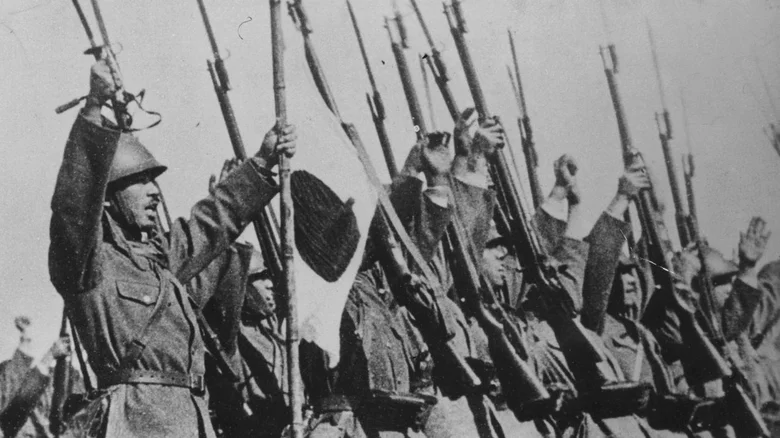
Japanese swords in WWII are usually discussed as “katana vs. modern war.” Although that framing is tempting, it is actually untrue. In Imperial Japan, the standard-issue reality was broader: mass-issued military swords (guntō), a surviving cavalry sabre tradition, and a very practical set of reasons why “a sabre” often beat “a katana” for mounted troops and for a modern conscript army.

This article breaks down the Japanese cavalry sword patterns that were still seen into the WWII era, what made these cavalry swords functionally different from katanas, and why militaries (not just Japan) kept the cavalry sword as a standard pattern long after firearms dominated the battlefield.

Why WWII Japan Still Cared About Swords at All

A sword was a weapon and a system signal

By the 1930s–1940s, the Japanese military sword was as much an authority marker as it was a blade. Officers were required/expected to wear a sword; it communicated rank, legitimacy, and “command presence.” Whether it was a guntō or a cavalry sword, this visual signal mattered in the field: symbols simplify hierarchy when radios fail, units mix, and confusion spikes.

Japan wasn’t unique here-many 20th-century armies kept edged weapons as part of uniform culture-but Japan leaned harder into the sword’s prestige value, especially as nationalism rose in the 1930s and military traditionalism became part of the public narrative. This cultural backdrop also fueled modern debates around katana vs sword, even when battlefield realities favored standardized military blades.

The Main Japanese Cavalry Sabres You See Into the WWII Era

Overview: What counts as a “cavalry sabre” in WWII Japan?

When people say “Japanese cavalry sabre,” they often mean one of two things:

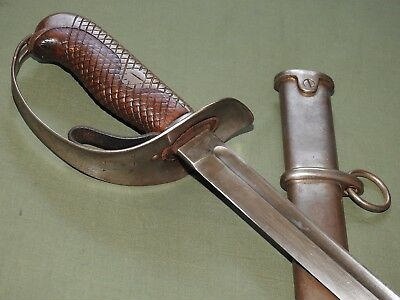
  1. Type 32 (Meiji 32) Cavalry Sabre (M1899) – the classic, true cavalry sword pattern used by mounted troops.

  2. Kyū-guntō Western-style officer swords – not strictly “cavalry-only,” but sabre-format cavalry sword associated with mounted/officer culture, and still seen into WWII as older stock stayed in service.

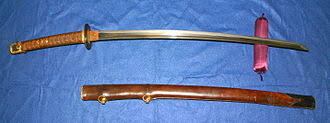
Then you have the 1930s shift to shin-guntō – more “Japanese-looking” mounts – used broadly by officers including those in cavalry and reconnaissance units, continuing the functional role of the cavalry sword within a modern army.

Type 32 Cavalry Sabre (Meiji 32 / 1899): The Workhorse Pattern That Lingered

What it was

Adopted in 1899, the Type 32 is the most straightforward Japanese cavalry sword: a modern military blade built for service, not ceremony. It existed in at least two common length patterns often described as:

  • Ko (longer)

  • Otsu (shorter)

Depending on source, the shorter pattern is associated not only with cavalry-adjacent troops but also other branches that benefited from a shorter, handier cavalry sword format.

Niche construction facts that matter

This is where the Type 32 screams “industrial military,” not “samurai craft”:

  • Consistent output and maintenance were made possible by Arsenal manufacturing and standardization, which are frequently credited to large arsenals like Tokyo’s.

  • Serial numbers and parts consistency show it was treated like equipment, not heirloom. Collectors frequently note matching numbers across components as an authenticity/issue clue – another sign of an interchangeability mindset.

  • Fuller (groove) design on many examples reduces weight while keeping stiffness, which is exactly what a cavalry sabre wants: fast recovery for repeated cuts and enough rigidity for thrusting.

  • Steel scabbards and robust mounts reflect field practicality less fragile than lacquered wooden saya under hard riding and rough climate logistics.

Why it stayed relevant into WWII

Because armies don’t throw away working kit. Older sabres remained in inventories, got re-issued, and showed up as wartime pressure grew. Even as Japan’s mounted arm evolved and mechanized reconnaissance expanded, legacy patterns kept circulating through the system.

Cavalry Sword

Kyū-Guntō: The “Western Sabre” Officer Sword That Overlapped Into WWII

What it was

Kyū-guntō (“old military sword”) refers to Western-style military swords used from the late 19th century into the early Shōwa period, broadly 1875–1934 as a standard era. They commonly feature:

  • D-guard / Western hilt protection

  • metal scabbards

  • fittings that look much closer to European officer swords than to Edo-period Japanese mounts

Why it matters for the cavalry-sabre conversation

Kyū-guntō aligns with what a modern cavalry/officer culture expects:

  • hand protection for chaotic close quarters

  • standardized military fittings

  • compatibility with modern uniforms and drill

Even after shin-guntō became the forward standard, kyū-guntō did not vanish instantly older patterns remained in circulation, especially among officers who already owned them or who were issued older stock during expansion.

Shin-Guntō (Type 94 / Type 98): A Nationalist Re-skin on a Modern Military Sword System

If Type 32 and kyū-guntō are “Japan adopting Western cavalry/officer sword logic,” shin-guntō is “Japan re-Japanizing the look – without abandoning standardization.”

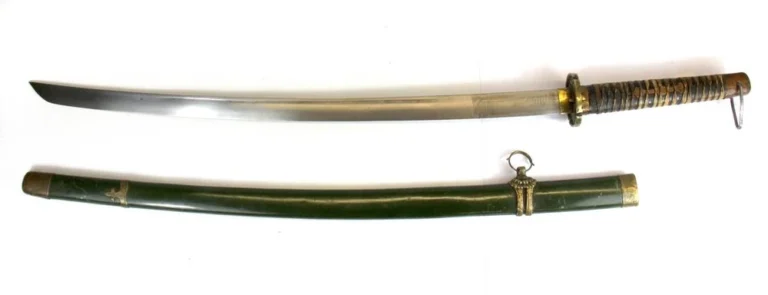
Type 94 (1934): the pivot point

Type 94 replaced Western-style kyū-guntō patterns for many officer contexts beginning in 1934. Key construction notes:

  • traditional-style hilt wrapping over ray skin

  • themed fittings (several examples have cherry blossom themes)

  • metal scabbards with wood liners on common wartime patterns

Type 98 (1938): simplification under pressure

Type 98 is widely described as a wartime simplification evolution of the Type 94 concept – less complexity, easier procurement – while keeping the “traditional” visual message.

Why this connects to “cavalry vs katana”

Shin-guntō often looks like a katana to the casual eye, but the important point is: it’s a military procurement category (guntō), not a guarantee of traditional katana manufacture. Blades ranged from traditionally made to machine-made depending on the sword and period.

So when someone asks “why not katana,” the accurate answer is: Japan often chose guntō – sometimes katana-shaped – because it scaled, signaled authority, and fit a modern army. Cavalry sabres like Type 32 survived where mounted handling and older inventories kept them relevant.

Why Militaries Issue Cavalry Swords as Standard Pattern (and Whether It’s “Better” Than a Katana)

The military logic (universally boring – and therefore true)

Militaries standardize cavalry swords because they optimize for:

  1. mounted ergonomics (one-hand use, guard protection, thrust/cut versatility)

  2. training scalability (predictable handling for large cohorts)

  3. logistics (spares, repairs, interchangeability, standard drill)

Japan’s own divisional structures and reconnaissance/cavalry lineage underscore that the cavalry mindset persisted organizationally even as the battlefield shifted.

Is cavalry “better” than a katana?

Yes, without a doubt, if you mean “better for a mounted soldier in a 20th-century military system.” The sabre is built around mounted doctrine and standardization.

If you mean “better weapon in a duel”: that’s the wrong KPI. WWII procurement is not about dueling excellence; it’s about:

  • cost

  • throughput

  • training time

  • durability

  • psychological signaling

On those metrics, a standardized sabre-pattern system (or a guntō system) wins.

The 3 Takeaways That Actually Matter


  1. Type 32 is the clearest “true cavalry sabre” pattern Japan carried from the modernizing Meiji era into the WWII period through legacy stock and cavalry heritage.

  2. Kyū-guntō and shin-guntō are about officers and systems, not “samurai purity” -they’re military swords built to scale, signal rank, and match modern uniforms.

  3. A cavalry sabre beats a katana on military procurement metrics: mounted ergonomics, training scalability, and logistics – exactly what modern armies optimize.

Explore Real Military Sword Designs Beyond Popular Myths


Understanding the difference between katana, guntō, and cavalry sabres reveals how modern armies actually think about weapons standardization, durability, and battlefield practicality.

At Doon Handicrafts, our military and historical replicas are built using documented references, verified typologies, and functional design principles inspired by real service weapons.

👉 Discover our range of historically inspired sabres, guntō-style swords, and cavalry weapons designed for collectors, reenactors, and institutions worldwide.