
Ceremonial Sword Used By Various Defense Forces: An In-Depth Overview
1- Introduction to Ceremonial Military Blades
Ceremonial military blades are symbolic weapons used primarily for display, honor, tradition, and institutional identity not for active combat. These swords, sabres, and daggers are part of formal dress uniforms, parades, honor-guard duties, commissioning ceremonies, and other official or ceremonial occasions.
Through design, presentation, and finishing, ceremonial blades reflect the heritage, values, rank and history of the military institutions that employ them. While many derive from originally functional weapons, their modern purpose is largely symbolic: authority, decorum, prestige.
In this article, we explore the evolution, classifications, and contemporary relevance of ceremonial military blades across branches, cultures, and eras.
2- Evolution of Military Ceremonial Swords Across History
Early Origins – Bronze Age to Iron Age
The earliest swords emerged in the Bronze Age (~3300-1200 BC), where communities crafted blades from bronze. Limitations in material strength constrained their length and durability.
As metallurgy advanced, iron and later steel enabled longer, stronger, more resilient blades. The shift to iron in the Iron Age allowed swords to become more than symbolic tools.
The Rise of Functional Military Swords – Antiquity to Roman Era
One of the most iconic early military swords was the Roman gladius, widely used by Roman legions. Short and optimized for thrusting in close-quarters formation combat, the gladius symbolizes disciplined infantry warfare.
As combat needs changed especially for cavalry the longer-bladed Spatha emerged, offering greater reach while maintaining balance, foreshadowing many of the later medieval sword traditions.
Diversification and Specialization in the Medieval to Early Modern Era
Through the medieval period, swords diversified: one-handed arming swords, two-handed longswords, curved blades for mounted combat (e.g., early sabres / proto-sabres), and regionally distinct designs across Europe, the Middle East, and Asia.
As the role of swords in actual combat declined especially with the rise of firearms their cultural and symbolic value grew. By the early modern period (1500-1800 AD), many swords began transitioning from purely functional weapons to status and ceremonial items.
Modern Era – From Weapons to Ceremonial Artifacts
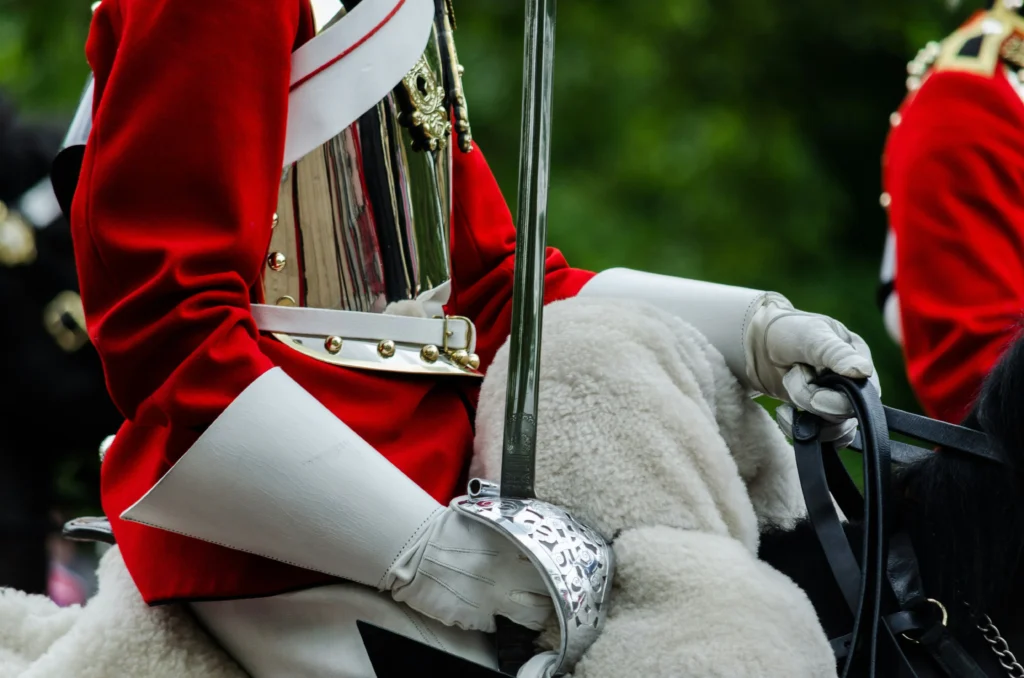
In contemporary militaries, swords are rarely used in combat. Instead they survive as “dress swords” or “ceremonial sabres,” reserved for parades, formal events, honor-guard service, and other ceremonial duties.
Their design often emphasizes aesthetics, tradition, and symbolism more than combat functionality ornate hilts, polished blades, engraved crests or emblems transforming them into wearable heritage artifacts rather than practical weapons.
3- Classification by Branch: Army, Navy, Air Force, Marine, and Gendarmerie
Military ceremonial swords generally follow the structure of the armed forces branches that employ them. The key branches are:
Army – including infantry, cavalry, artillery, guards/regiments.
Navy – covering naval officers, naval infantry, marines, sailors, and specialist roles (e.g. bosun, master-at-arms).
Air Force – for air force officers, ceremonial units, honor guards.
Marine / Naval Infantry – sometimes inter-branch; reflects amphibious or marine corps identity.
Gendarmerie / Guardia / National Guard-type forces – paramilitary or internal security forces that also use ceremonial blades.
Each branch formalizes its own regulations, uniforms, and blade patterns – serving both practical identification and ceremonial symbolism.
4- Officer vs. NCO Swords: Key Differences in Form and Function
A major axis of variation in ceremonial blades is rank – especially between officers and non-commissioned officers (NCOs). Key differences:
Design sophistication: Officer swords tend to have more elaborate hilts, engravings, ornate guards, polished mounts, and ceremonial scabbards. NCO swords are often simpler, utilitarian but still ceremonial.
Blade style & quality: Officer swords are produced with higher-quality steel, balance, and sometimes keep battle accurate design (for historical use), whereas NCO swords are typically lighter, simpler, and simply symbolic.
Function and symbolism: Officer swords represent commission, authority, leadership; NCO swords represent service, rank, responsibility often used in formal parades, retirement, promotions.
For instance, the Model 1840 Army Noncommissioned Officer’s Sword of the U.S. Army was heavy-hilted and relatively crude compared to officer swords; by 1875 its operational use ended, replaced by ceremonial wear especially for honor-guards or ceremonial units.
5- Army Officer Swords and Sabres (Global Overview)
Within armies worldwide, ceremonial officer swords reflect historical lineage, unit identity, and branch heritage:
Infantry officers may carry straight-bladed swords representative of historic infantry swords often with basket or guard hilts. Example: the Pattern 1897 infantry officer’s sword of the British Army.
Cavalry and armored units historically used sabres curved, slashing-blade swords suitable for mounted charge. In ceremonial form, these sabres remain extended in some cavalry lineage units.
Artillery, Guards, Honor regiments often have unique traditions swords may include elaborate engravings, unit crests, or even inherited patterns linked to historical battles or honors.
Over time, as field combat changed, many functional swords were replaced, but their ceremonial descendants remain as symbols of continuity, discipline, and heritage.
6- Cavalry Sabres: Heavy, Light, and Parade Variants
Cavalry traditions have produced some of the most visually and functionally distinct ceremonial blades:
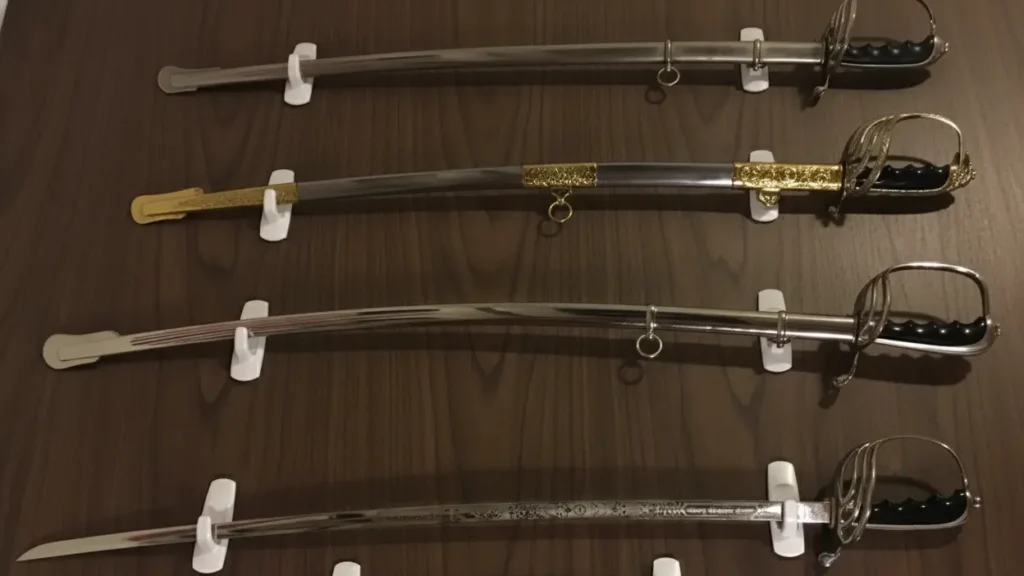
Heavy Cavalry Sabres – originally built for shock combat on horseback: long, curved blades, thick spine, strong guard. In present-day ceremonial use, these sabres often remain heavier, more substantial, carrying the weight of history.
Light Cavalry Sabres / Hussar-style Sabres – lighter blades, more slender curvature, often with ornate guards and embellishments, designed for speed and show during parades or mounted ceremonies.
Parade Sabres – purely ceremonial variants, sometimes with decorative scabbards, polished brass fittings, engraved guards. These may never have seen active combat; their design emphasizes visual impact over balance.
Historically, curved sabres evolved from earlier straight swords and long Roman cavalry swords (like spatha). Their design optimized slashing from horseback a heritage that carries through into ceremonial cavalry units of modern armies.
7- Infantry Swords: Short Swords, Small Swords, and Dress Blades
While cavalry sabres grab attention, infantry swords (and their ceremonial descendants) played a central role in shaping sword design traditions:
Early infantry swords, such as the gladius, were compact and optimized for thrusting in tight formations representing discipline, control, and uniformity.
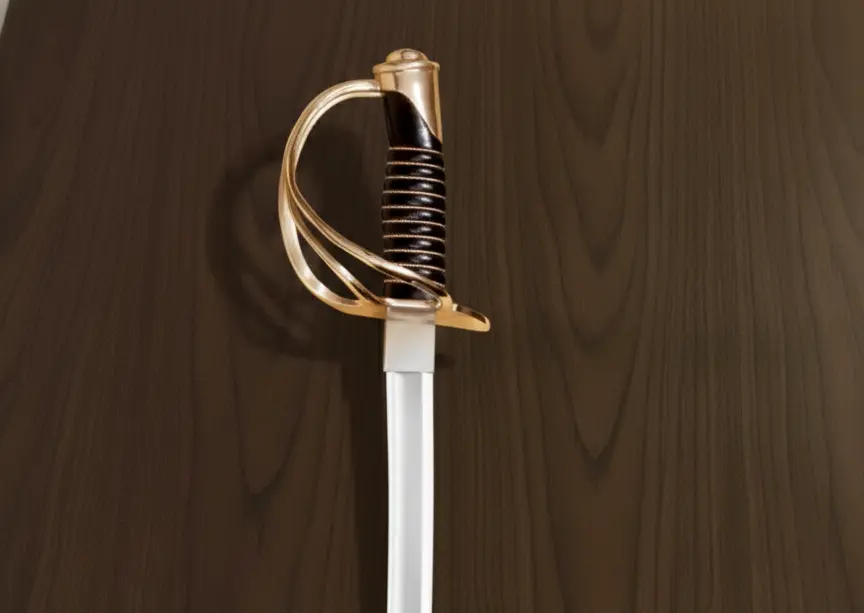
Over centuries, infantry blades evolved: from straight thrust-oriented swords to lightly curved or swept-hilt “dress swords” suitable for duelling, status, or ceremonial display.
In many modern militaries, infantry officer swords are shorter and more modest compared to cavalry sabres often straight-bladed with simple elegant hilts emphasizing the conceptual link to disciplined, ground-based forces.
These less-glamorous weapons are nonetheless essential they symbolize the backbone of armed forces: the infantry.
8- Navy Officer Swords: Cutlass to Dress Sabre
Naval traditions have a rich legacy of unique ceremonial blades. Key aspects:
Historically, navies favored the cutlass short, broad, curved blade ideal for close-quarters combat aboard ships. This practicality carried into early naval blade traditions.
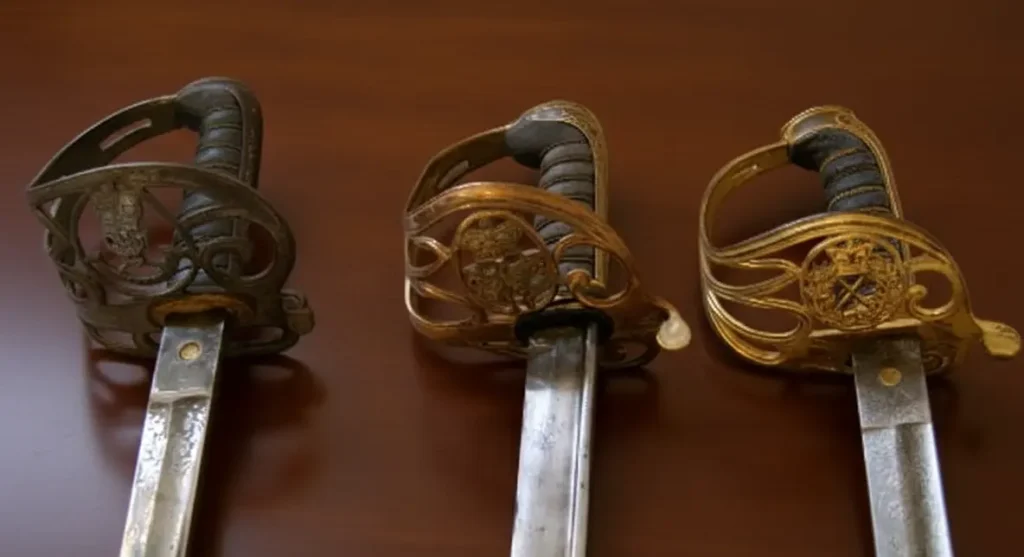
As naval uniforms and traditions formalized, navies adopted dress sabres or naval officer swords longer, more refined blades manufactured for ceremonial use, parades, and formal occasions. These often carry ornate guards, polished blades, and ribbons or tassels as per national regulation.
Many of these naval swords are no longer sharpened and exist solely as symbolic items, reflecting hierarchy, command, tradition, and maritime heritage.
9- Naval NCO Cutlasses and Bosun Blades
In naval tradition, non-commissioned officers and warrant officers often carry simpler, more utilitarian blades:
Cutlasses remain iconic for NCOs and enlisted ranks with shorter, robust blades and functional designs, representing readiness and practicality.
Bosun’s or Master-at-Arms swords are another variety for certain specialist roles or shore-based personnel; they often mimic the look of officer swords but in simpler form: basic grips (e.g., fish-skin wrapped with wire), plain blades, and less decorative scabbards.
These patterns highlight the rank and role difference within the same naval tradition: commissioned officer vs other ranks.
10- Air Force Ceremonial Swords Across Nations
While the advent of airpower reduced necessity for melee weapons, several air forces continue to maintain ceremonial sword traditions:
Swords carried by Air Force officers often mirror those of their army or navy counterparts, adapted to air force dress uniforms. They serve as symbols of rank, tradition, and continuity rather than combat readiness.
For example, in some countries, cadets graduating from air force academies receive ceremonial swords (or similar awards) to mark commissioning akin to the “Sword of Honour” tradition seen in certain nations.
Use typically includes parades, commissioning ceremonies, formal events, and representation during official functions underscoring identity, honor, and belonging to a storied military tradition.
11- Marine Corps and Naval Infantry Blades
Marines and naval infantry bridging naval and army traditions often carry unique ceremonial blades that reflect their amphibious heritage:
The marine sabre or sword may combine naval cutlass tradition with army-style sabres or swords, acknowledging dual affiliation (sea + land).
Historically, these blades might have been more functional (boarding actions, amphibious landings), but modern ceremonial variants emphasize prestige, tradition, and institutional identity.
In countries where marines or naval infantry have high ceremonial visibility (guard duties, parades, state functions), their swords become part of the public image of strength and discipline important for morale and tradition.
12- Honour Guards, Presidential Guards, and Special Units
Some elite or honor units maintain unique ceremonial blade patterns often steeped in national tradition, pageantry, or symbolic heritage:
Honor guards, presidential guards, royal guards often carry distinctive swords decorated with national emblems, crests, mottos, or historical motifs. These pieces may differ markedly from standard army/navy patterns, reflecting status, ceremonial role, and national symbolism.
In many cases, blade design, scabbard ornamentation, and uniform regulations are strictly codified, ensuring consistent presentation across ceremonies.
These swords serve not just as military symbols, but as national or institutional icons bridging history, heritage, and contemporary identity.
13- Asian Ceremonial Military Swords
In Asia, sword traditions influence ceremonial blades blending native sword heritage with modern military symbolism:
In some nations, traditional swords have been adapted into ceremonial blades for modern armed forces preserving cultural identity while aligning with military protocols.
For example, historical Japanese swords influenced later ceremonial patterns; other Asian swords (though not always directly used in modern militaries) inform the aesthetics, symbolism, or motifs of ceremonial blades.
Such blending preserves cultural heritage: ceremonial swords become more than military paraphernalia they carry social, historical, and cultural meaning.
14- Middle Eastern and Islamic Ceremonial Blades
Middle Eastern and Islamic sword traditions with curved blades such as shamshir, saif, khanjar have influenced ceremonial swords in modern uniforms:
The aesthetic of curved blades intrinsic to regional sword-making history sometimes appears in ceremonial saber designs for officers from Middle Eastern or Islamic countries.
These blades often carry ornate decorations: engravings, damascening, inscriptions blending cultural heritage (Islamic art, calligraphy) with military symbolism of honor, tradition, and authority.
Through ceremonial use, such swords preserve historical identity reminding of chivalric, martial, and cultural roots even in contemporary armed forces.
15- European Ceremonial Patterns by Country
European militaries with long-standing sword traditions often standardize ceremonial blades by country, branch, and regiment:
United Kingdom: The 1897 Pattern infantry officer’s sword remains the standard ceremonial sword for many infantry officers a straight-bladed, basket-hilted sword used since 1897, now largely symbolic.
France, Germany, Italy, Spain, Nordic countries: Each has its own traditional sword and sabre patterns many deriving from historic cavalry or infantry designs adapted over generations to ceremonial purposes.
Over time, these patterns helped cement national military identity: one can often recognize a country or branch simply by the style of sword carried in a parade.
16- American Ceremonial Swords
In the United States across Army, Navy, Marine Corps, Air Force ceremonial swords continue to play a role, though with distinct American evolution:
The U.S. Army historically used items like the Model 1840 NCO sword heavy, functional, later phased into ceremonial role.
The U.S. Navy and Coast Guard require officers above certain rank to own ceremonial swords often used for parades, changes of command, formal events. These are typically double-bladed naval service swords (though no longer sharpened).
Marine and Coast Guard traditions combine naval heritage with marine infantry identity so ceremonial swords reinforce dual lineage and formal appearance.
In modern U.S. services, while combat roles have long moved on from edged weapons, ceremonial swords remain potent symbols of honor, tradition, and continuity.
17- Symbolism, Heraldry, and Engravings
Ceremonial swords frequently have profound symbolic meaning in addition to being ornamental. Key aspects:
Heraldry & Emblems: Swords often bear unit crests, national coats of arms, regimental badges, royal or national cyphers, and other marks of institutional affiliation and heritage.
Designs & Objectives: Time periods, thoughts, and war awards are often printed on swords or guards to connect history with the weapon. Inscriptions like this frequently function as a linguistic bridge between the past and the present.
Materials: Polishing metal, gold or brass guards, leather and other accents that indicate formality and rank beyond simple usefulness improve the visual richness.
As a result, the ceremonial sword is no longer a weapon of battle but rather a worn symbol of pride, heritage, and identity.
18- Materials and Manufacturing Techniques
Even ceremonial swords draw from centuries of metallurgical and craft evolution:
Early swords evolved from bronze to iron to steel with each transition enabling stronger, longer, more durable blades.
Modern ceremonial swords generally use steel often alloyed, sometimes stainless optimized for polish, durability, and resistance to corrosion, rather than battlefield performance.
Scabbards and mounts are often crafted from leather, wood, brass or other metals; fit and finish are prioritized to meet dress-uniform standards rather than combat ruggedness.
Craftsmanship remains important even for ceremonial swords because these are heritage items: balance, symmetry, engraving quality, and finishing all contribute to perceived value, institutional respect, and longevity.
19- Regulations, Protocols, and Uniform Standards
Ceremonial swords are not casual accessories their use is often governed by strict regulations:
Militaries worldwide define which ranks, branches, and occasions justify wearing a sword (parades, formal dress, commissioning ceremonies, guard duties, state functions, etc.).
For example, some naval services require commissioned officers or higher-ranked officials to maintain a ceremonial sword in their uniform inventory for official events, changes of command, formal parades.
Swords must meet prescribed specifications blade length, type of hilt, engravings (or lack thereof), scabbard materials to ensure uniformity across a given military institution. Noncompliance may render the sword unofficial or ceremonial only.
These regulation frameworks maintain consistency, discipline, and respect for tradition within armed forces.
20- Modern Usage: Parades, Commissioning, Drill Teams, Weddings
Despite advances in firearms and modern warfare, ceremonial swords remain relevant for tradition, symbolism, and pageantry:
Parades and reviews: Military parades often include officers and honor guards bearing swords, adding solemnity, historic gravitas, and formal dignity to proceedings.
Commissioning and passing-out ceremonies: Newly commissioned officers or cadets often receive ceremonial swords to mark their entry into service a rite of passage and symbol of responsibility.
Drill teams and honor guards: Swords remain an integral part of drill routines, salutes, and ceremonial drills visually powerful and steeped in tradition.
Social occasions: Swords may be worn at formal military weddings, mess dinners, or other dress-uniform events reinforcing the ongoing symbolic role even outside strictly military events.
21- Collectors’ Market and Reproduction Standards
For collectors, historians, and fans especially craftsmanship-focused manufacturers ceremonial swords (and their copies) offer an intriguing domain:
Original vs. Replica: Military issued ceremonial swords have provenance, heritage, and status. The value of replicas is found in skill, materials, and historical authenticity; they may mimic design but lack institutional provenance.
Rules and Ethics: Many governments now regulate the possession, transportation, export or import, and display of swords.Collectors must guarantee compliance with legislation governing edged weapons ceremonial usage or exhibition does not usually remove them from regulation.
Quality Markers: Accurate blade geometry, suitable materials (steel, wood, brass), period-appropriate scabbard design, and appropriate finishing (polish, engravings, hilt wrapping) are characteristics of high-quality replicas. These elements have a big impact on authenticity and value when it comes to historical reenactment or display.
Market Demand: Collectors generally value rarity (regimental variants, limited production swords), historical provenance (connected with specific units or events), craftsmanship excellence, and condition (original versus well-maintained).
Knowing these criteria as a producer and craftsman enables you to match craftsmanship and authenticity for customers looking for high-quality or historically correct ceremonial blades.
22- Conclusion: The Cultural Power of the Ceremonial Sword
Ceremonial military blades are far more than decorative relics. They embody centuries of martial tradition, national identity, institutional history, and honor. From the compact gladius of Roman legions to the polished sabres of modern honor guards, these blades reflect human societies’ evolution in metallurgy, military doctrine, and cultural symbolism.
For contemporary militaries, ceremonial swords serve as tangible links to heritage, discipline, and continuity. For collectors, historians, and craftsmen, they represent artistry, legacy, and respect for martial traditions.
Choose the Blade That Represents Your Legacy
Across armies, navies, and air forces, ceremonial swords symbolize rank, achievement, and responsibility. Whether for display, graduation, or collection, the right blade reflects both heritage and personal journey.
Compare globally inspired ceremonial sword designs and find the one that aligns with your tradition, story, and purpose.
 Explore our ceremonial and heritage weapon collections and make your statement.