Doon Handicrafts

Viking Heritage: Weapons, Shields & Sword

Viking Heritage: Weapons, Shields & Sword Vikings

The world was always fascinated by the Vikings, who were warriors from the chilly fjords of Scandinavia who sailed across Europe between the eighth and eleventh centuries, leaving behind timeless legends and stories of exploration and conquest. However, to dismiss them as merely raiders would be to overlook the depth of their cultural legacy. In addition, they were craftsmen, poets, shipbuilders, traders, and explorers. Viking weapons, which were much more than just tools of war, are among the most interesting examples of their culture. They were extensions of hand and soul, symbolizing spiritual belief, status, and identity. In many respects, understanding Viking heritage is equivalent to understanding their weaponry.

The Viking World: Context of War and Survival

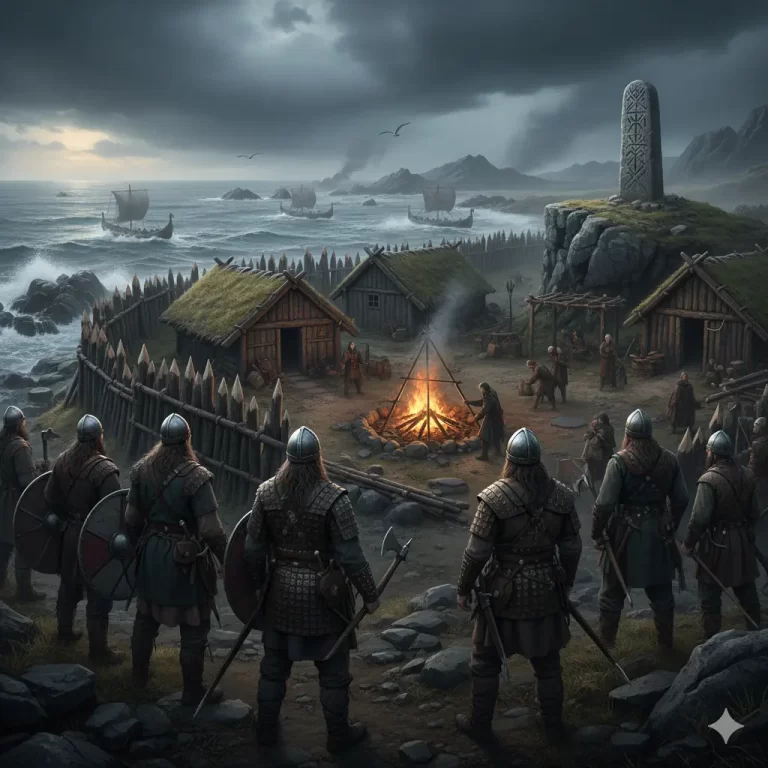
During the Viking Age, life in Scandinavia was hard and demanding. Because of the tough environment, long winters, and shortage of farmland, survival often depended on strength, creative abilities, and the capacity to protect one’s family. One of the reasons Viking communities grew through exploration and attacks was the ongoing competition for resources and territory.

Viking swords and shields were essentials in such a world, not luxuries. A Viking’s weapons served as his insurance, his masculinity symbol, and frequently his primary source of income and reputation. The importance of arms to Viking life is continuously demonstrated by archaeological discoveries in graveyards in Norway, Sweden, and Denmark. Given that they were buried with their owners, it is possible that these implements followed their owners into the afterlife.

Viking

Weapons as Symbols of Identity

A Viking’s arms were not simply practical items. They told the world who he was. Unlike today, when clothing, brands, or cars might signal wealth and power, during that era the sword, the axe, or the shield that carried meaning.

The Sword as Status

Weapons were status markers. The sword, in particular, was highly prestigious. Forged with immense skill, often passed down for generations, and sometimes even given names, The privileged were the only ones with swords. As evidence of the interconnected trade of the era, several of them were brought from the Frankish kingdoms and had markings. A man was considered distinguished and deserving of respect if he possessed a sword, which was equivalent to wearing a crown.

Axes and Spears as Everyday Tools

Axes and spears, on the other hand, were more widely used and useful, but it did not lessen their importance. The fact that anyone, from a farmer to a king, could wield weapons showed the resourcefulness and practicality of Viking society. Particularly, the axe came to represent Viking identity and was eventually immortalized in both sagas and contemporary culture.

The Sword Vikings: Prestige and Power

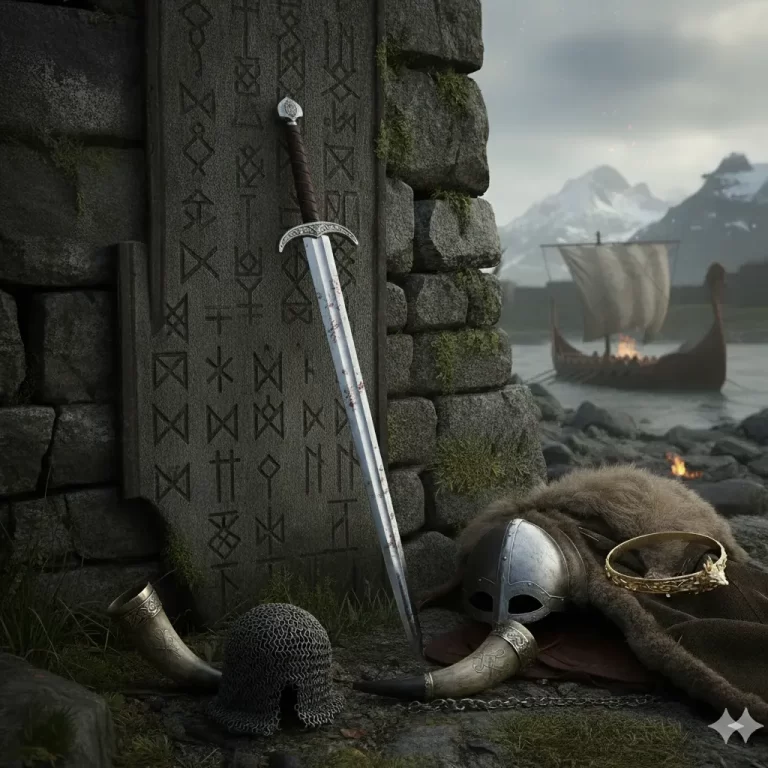
The Viking sword was a weapon of both beauty and terror. Measuring typically between 70–90 cm, with double-edged blades and ornate hilts, These swords were metal-based masterpieces. Many bore pattern-welded designs — swirling lines created by folding and twisting iron — turning them into both deadly tools and works of art.

But beyond function, swords carried immense symbolic weight. To own one was to be respected. Sword Vikings, as saga writers often described them, were men of prestige. Their swords were given names — “Leg-biter” or “Wolf of the Wound” — and spoken of as if they were companions. They were heirlooms, linking generations in an unbroken line of warrior heritage.

Warriors who would rather die than lose their swords are frequently described in the sagas. Being disarmed meant losing one’s identity, which was dishonorable.

Sword

The Axe: Tool of Work and War

If the sword was the rich and powerful weapon, the axe was the common man’s companion. Farmers used axes daily for chopping wood, building homes, and shaping ships. Yet in battle, the same tool became destructive. Viking axes varied from the simple hand-axe to the mighty Dane axe, a two-handed weapon with a long shaft and broad blade With the ability to cut through armor.

What made the axe iconic was its duality: it embodied both survival and destruction. In art and saga, the axe is often associated with Thor, the god of thunder, whose hammer Mjölnir was both a protector’s tool and a weapon of war.

Shield

Spears, Shields, and Bows: The Everyday Arsenal

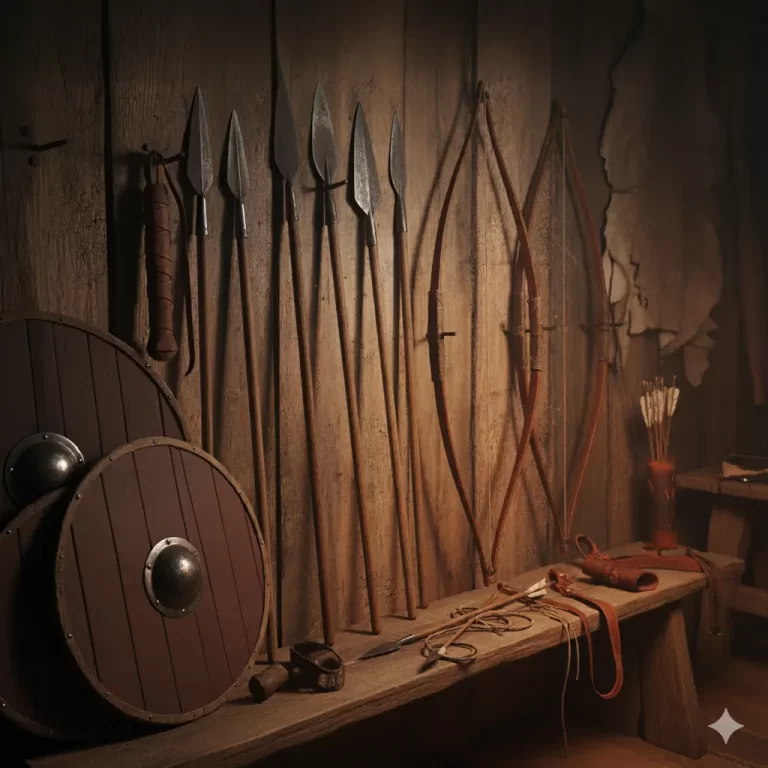
Spears were perhaps the most common Viking weapons. Affordable to make and versatile in combat, they were used for pushing, throwing, and even in ritual sacrifice. Some spears were finely crafted, with leaf-shaped blades and decorated sockets, while others were plain but effective.

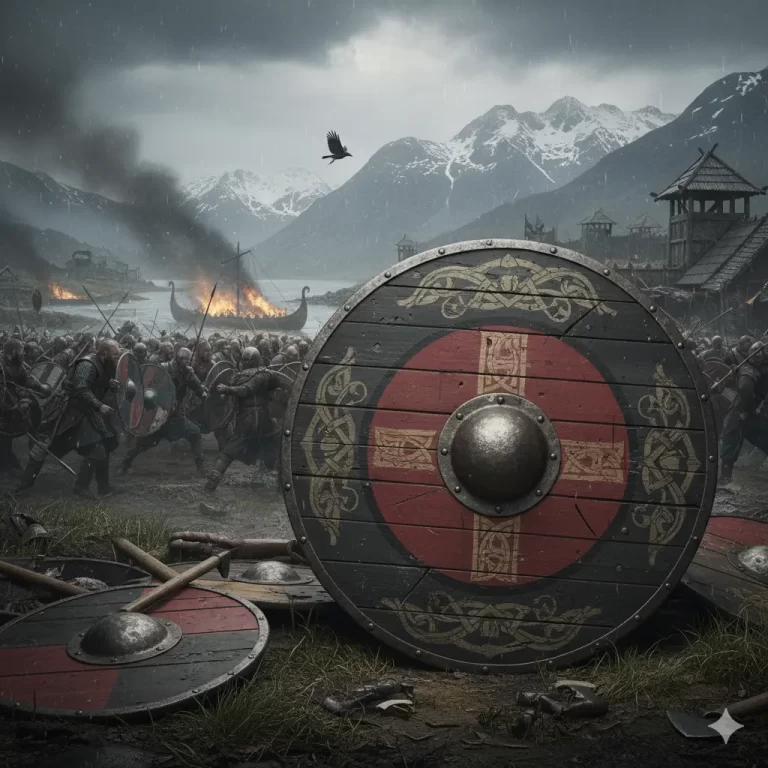
Viking shields, round and wooden, reinforced with iron bosses, were essential not just for defense but for the famed Viking battle formations. The “shield wall” was a tactical innovation, where warriors locked shields together to form a moving barrier of wood and iron – An example of discipline in a culture that is often seen as disorganized.

Bows and arrows were equally vital, though less glamorous. They were hunting tools, but also decisive in battle, allowing warriors to strike from a distance. Arrowheads were found in a variety of shapes during archeological research, each designed for a different purpose — broadheads for piercing armor, lighter tips for hunting game.

Weapons and the Viking Afterlife

To the Vikings, arms had spiritual meaning and were more than just physical belongings. Warriors are buried with their weapons at grave sites throughout Scandinavia and even in Viking-settled areas of England and Ireland. This was not random; instead, it was a reflection of the concept that a man might require his arms in the halls of Valhalla or other regions in the afterlife.

The idea of a warrior’s worthiness being judged by his arms recurs in Norse mythology. Odin’s chosen — the einherjar, or fallen warriors — were believed to fight eternally in Valhalla, preparing for Ragnarök, the final cosmic battle. To be selected for such honor, one needed to die weapon in hand, brave in combat. Thus, the sword, the axe, and the shield were more than earthly tools — they were tickets to immortality.

The Legacy of Viking Weapons

Today, Viking weapons and shields continue to capture imaginations. Museums in Oslo, Copenhagen, and Stockholm display exquisite examples, and archaeological digs still unearth blades, axes, and shields, each telling a story of craftsmanship and culture. These techniques have been projected and even amplified in contemporary television and cinema, but the reality is already fascinating enough.

The significance of Viking arms lies not only in their use but in what they represent: resilience, identity, and artistry. These were people who lived hard lives, demanded much of their tools, and poured into them both function and meaning.

For historians, each sword and shield is a piece of evidence about social hierarchy, trade networks, and belief systems. For descendants and admirers, they are emblems of heritage — reminders of a world where survival and honor depended on the strength of one’s arm and the sharpness of one’s blade.

Conclusion: More Than Steel and Wood

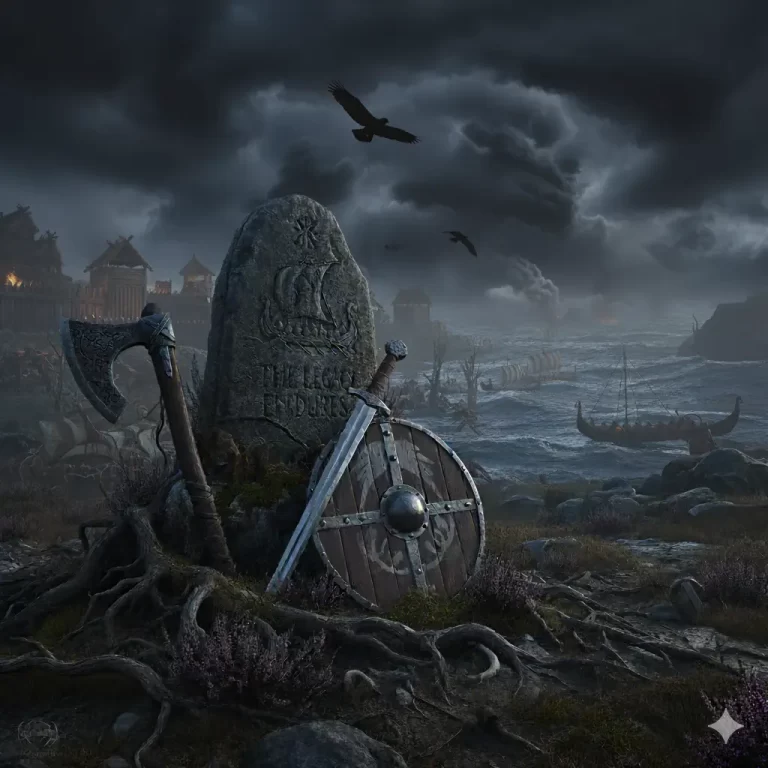
Viking heritage cannot be separated from its arms. From Viking shields raised in defense, to the prestige of Sword Vikings, to the everyday axes and spears of farmers, each carried meaning beyond battle. These were not only tools of survival but vessels of identity, artistry, and faith.

To hold a Viking weapon today is to touch a fragment of that world: a reminder of men and women who braved the seas, forged kingdoms, and left behind a legacy still sharp in memory, like the edge of their steel.

Discover the Weapons That Defined the Viking World

From powerful axes of farmers to elite swords of chieftains, Viking weapons tell stories of survival, status, and belief. Modern reproductions vary widely in authenticity, balance, and design.


Compare historically inspired weapons and explore how real Viking craftsmanship translates into modern collections.


👉 Browse our Viking range and find the designs that resonate with your heritage and interest.