
Types of Viking Weapons: History, Materials, and Who Used Them
Viking weapons weren’t random “raider gear.” They were a highly tuned toolbox formed by the realities of the battlefield, budget, and prestige. Archaeology is clear: the average Viking carried spear + shield, maybe an axe; the sword was for the privileged only.
This guide breaks down the main types of Viking weapons, their history, materials, and typical users, then closes with a focused FAQ.
Viking Weapons at a Glance
Archaeological finds and museum collections show a consistent pattern of core Viking weapons:
Offensive weapons
Spears / lances – primary battlefield weapon
Axes – from farmer’s tool to specialized battle axe
Swords – high-status, elite weapons
Bows and arrows – used for both hunting and war
Knives / seaxes – everyday utility and backup weapon
Defensive equipment
Round wooden shields
Helmets and mail shirts (chain mail) – much rarer and mostly for the wealthy
If you remember only three “core” Viking weapons, think:
Spear – standard weapon of the fighting man
Axe – multi-purpose tool turned battlefield staple
Sword – prestige sidearm of the elite
Viking Swords: Status Symbols of the Elite
History and Typical Users
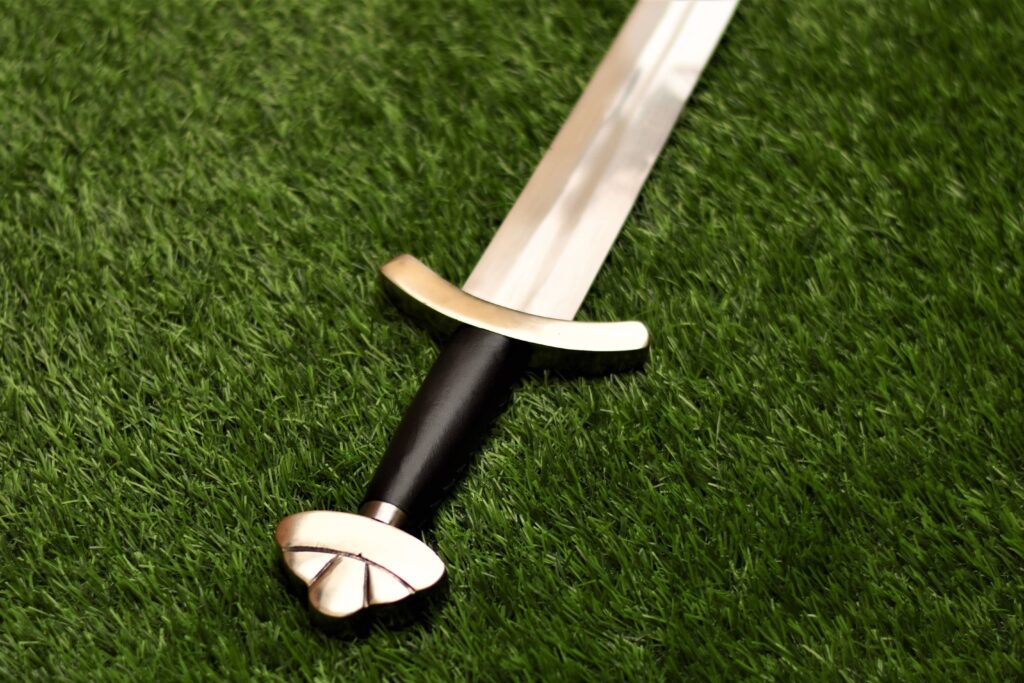
Viking swords appear in rich graves, sagas, and museum collections across Scandinavia and the North Atlantic. They were typically 80–90 cm long, double-edged and designed for one-handed use with a shield.
Key points from museum and metallurgical studies:
Not common: swords were expensive to make and were mostly owned by chieftains, wealthy farmers, and professional warriors.
Named weapons: in the sagas, swords often got names and were passed down as family heirlooms, showing their emotional and social value.
Frankish imports: many sword blades were imported from the Frankish realm and then hilted locally, blending continental steel technology with Scandinavian aesthetics.
So, “popular user” here = high-status Viking: jarls, elite retinues (húskarlar), and especially those who could display wealth and power.
Materials and Technology
Archaeological and metallurgical work highlights three key aspects:
Iron and early steel:
Most blades were forged from iron or low–medium carbon steel, heat-treated to balance toughness and hardness.
Pattern-welding:
Earlier Viking-Age swords often used pattern-welded blades – twisting and welding iron/steel bars into decorative, stronger patterns.
This created the “damascus-like” patterns visible on many excavated blades.
Crucible / high-carbon “premium” steel:
Some swords belong to a distinct metallurgical group with high-carbon crucible steel — lighter, harder, and more flexible than most contemporary blades.
These swords represented the “premium tier” of Viking-age swords.
In short: Viking swords were technology-dense status assets, not basic raider kit.
Viking Axes: The Workhorse Weapon
History and Typical Users
Unlike swords, axes were everywhere. Archaeological surveys show axes in both rich warrior burials and simpler graves.
Farmers and raiders: the same tool used to fell trees could be taken on campaign.
Early period: simple, relatively small axe heads – mostly dual-use (tool + weapon).
Later period: specialized battle axes emerge, including large two-handed axes used by elite warriors.
So the “popular users” of axes ran the full spectrum: from ordinary farmers to elite bodyguards. For many, the axe was the most realistic, affordable weapon.
Materials and Forms
Museum collections and modern analyses show:
Iron axe heads:
Forged from iron, often with a harder steel edge welded on for better cutting performance.
Wooden hafts:
Handles (now often decayed in the ground) were wooden – practical, replaceable, and easy to customize.
Types:
Bearded axes – extended lower blade giving extra cutting edge and “hooking” capability.
Two-handed battle axes – long-hafted, large blades, iconic in late Viking and early medieval warfare.
Decorative / ceremonial axes — some show silver inlay or ornamental work, linking weaponry to both pagan and Christian symbolism.
Net: The axe is the single most scalable Viking weapon – affordable, versatile, and deadly.

Spears and Lances: The Default Battlefield Weapon
History and Typical Users
Multiple museum and educational sources align on one point: spears and axes were the preferred weapons of most Vikings, while swords were for those with means.
Why?
Low cost: a spearhead requires much less iron than a sword.
Tactical reach: ideal in shield walls and for keeping distance.
Flexible usage: spears could be used for thrusting in close formation or thrown as javelins.
Typical “popular users” included:
Bondi (free farmers) serving in levies
Ship crews on raiding expeditions
Retainers in a lord’s warband, often carrying spear + shield as baseline kit
In Norse myth, legendary spears reinforce the cultural importance of spears; potential myth-histories add symbolic weight to their practical usage.
Materials and Construction
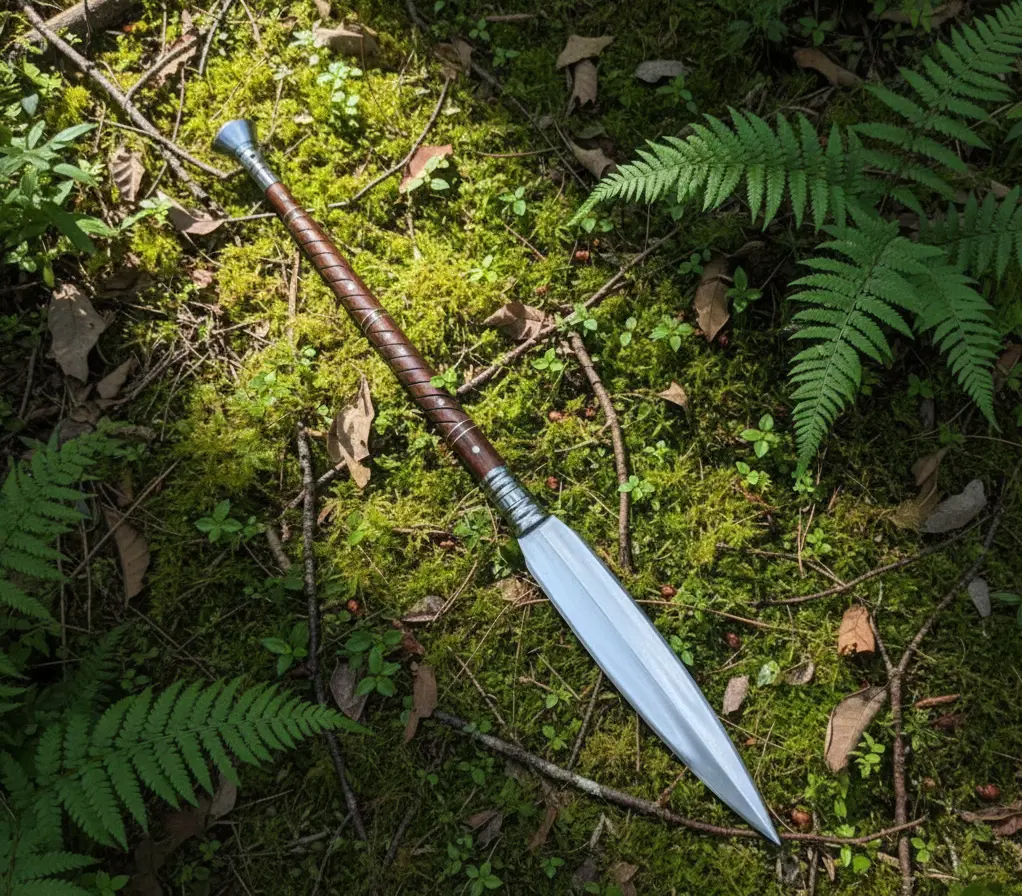
Iron spearheads:
Leaf-shaped or elongated points forged from iron/steel, sometimes pattern-welded in earlier examples.
Wooden shafts:
Typically ash or similar hardwoods; cheap to produce and easy to replace.
Spears are effectively the high-ROI weapon of the Viking arsenal: low material cost, high battlefield impact.
Bows and Arrows: The Underrated Force Multiplier
Archaeological and Textual Evidence
While popular imagination focuses on axes and swords, both archaeology and written sources confirm significant Viking use of bows.
Excavated bows from Viking-era sites show large longbows over 1.8 m (6 ft) in length, made of yew.
Arrowheads are found in Viking contexts across Scandinavia and the British Isles.
Historical accounts and reconstructions highlight archers playing roles in both naval skirmishes and land battles, as well as hunting.
Materials and Typical Users
Bows:
Generally self bows (single piece of wood), often yew, matching European longbow traditions.
Arrows:
Wooden shafts with iron heads designed for piercing armor or for hunting.
“Popular users” here were hunters, scouts, and warriors trained from youth. Archery offered Vikings a range advantage before shield-wall contact.
Shields and Defensive Gear: Half the Weapon System
A Viking is only half-prepared if they do not have a shield. Round shields are described as typical equipment in specialized research and museum reconstructions.
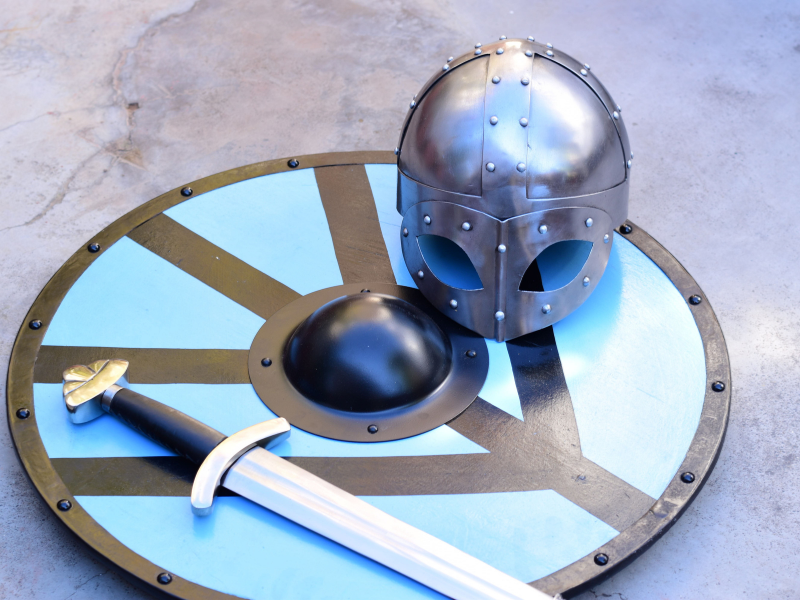
Dimensions: typically 80–90 cm in diameter in the Viking Age.
Construction:
Multiple thin wooden planks joined together.
Central iron boss (umbo) protecting the hand and allowing punching, not just blocking.
Edges sometimes reinforced with leather or rawhide.
Shields were used offensively (punching, binding enemy weapons) and in shield-wall formations. For most free men, the shield plus spear/axe was the standard configuration.
Helmets and mail shirts existed but are rarer in the archaeological record and are generally interpreted as equipment of the upper tiers of society.
Summary of Materials Used in Viking Weapons
Pulling the data together:
Metals
Iron – backbone material for blades, spearheads, axe heads, shield bosses.
Steel (various carbon levels) – through carburization and refining; higher carbon used on cutting edges.
Crucible / high-carbon steel – in high-end swords, imported and metallurgically distinct.
Organic materials
Wood – hafts, spear shafts, bow staves (often yew), shield planks.
Leather and textiles – for shield edges, grips, scabbards, and armor layers.
Decorative materials
Silver and copper alloys – inlay on axes and swords in certain ceremonial or high-status weapons.
Ivory / bone and other special materials – sometimes used for hilts or decorative inlays.
From a materials standpoint, Viking weapons reflect smart resource allocation: iron and wood where scale mattered, premium steels and decorative inlays where status mattered.
Mythical Norse Weapons of the Norse Gods: Divine Tools Beyond Mortal Arms
The Norse pantheon wields legendary weapons that are far more than mortal tools they embody divine power, fate, and supernatural craftsmanship. Two of the most iconic:
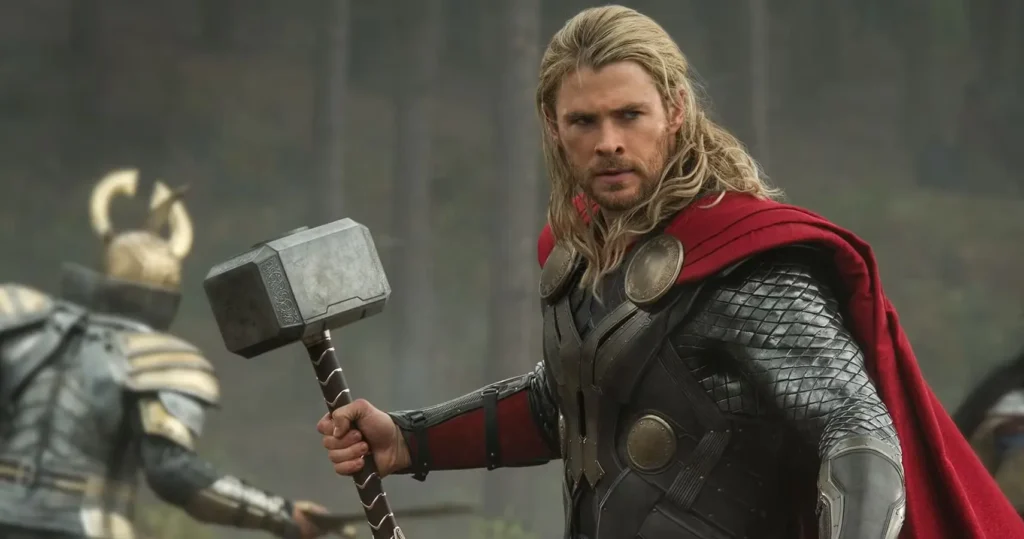
Mjölnir — the hammer of Thor. Forged by magical dwarves, it is said to enable Thor to summon thunder and lightning, strike with devastating force, and even return to his hand when thrown. It could shrink small enough for concealment and was often used to sanctify rituals or blessings.
While the exact “material” is never described in mortal terms, myth describes it as crafted in the divine forge by expert dwarven smiths an artifact beyond human metallurgy.
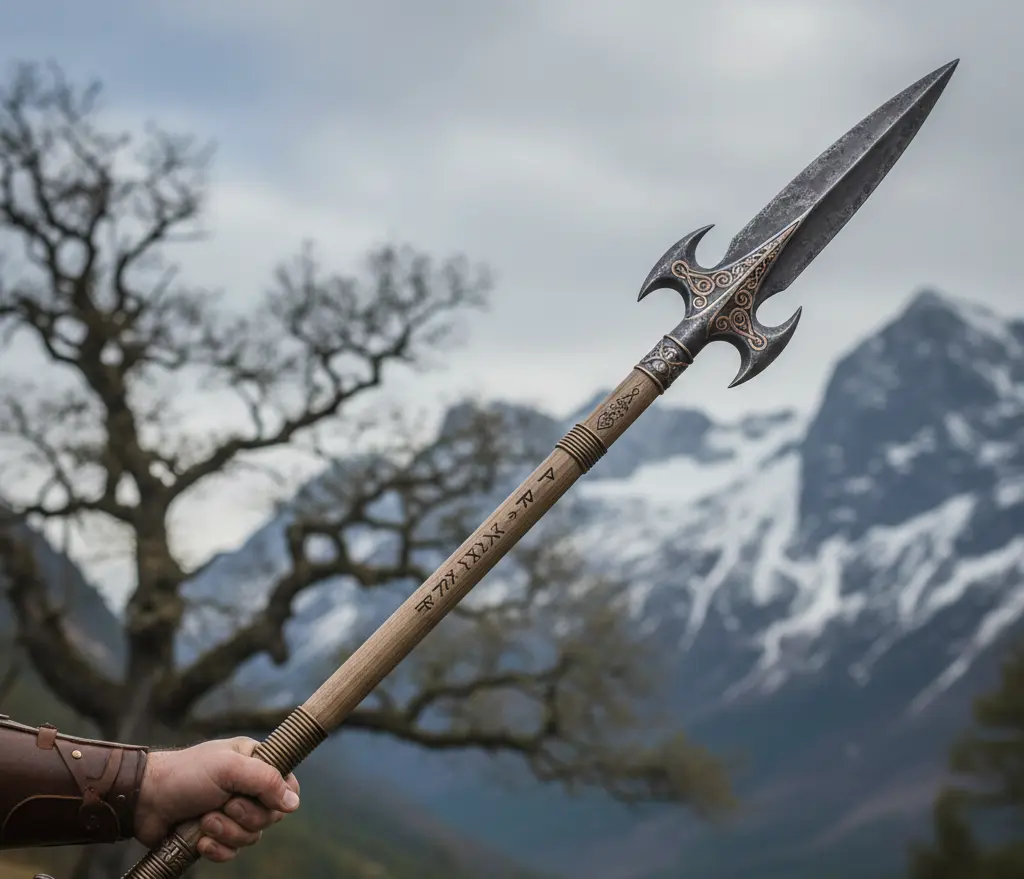
Gungnir — the spear of Odin. According to myth, it was crafted by master dwarves (the Sons of Ivaldi) and inscribed with magical runes. Once thrown, Gungnir never misses its target, no matter the wielder’s strength or skill. Its precision and infallibility made it a symbol of divine authority and fate.
In legend, Gungnir was used by Odin during key mythological events — to seal oaths, initiate war, or lead cosmic battles.
Beyond these, Norse lore mentions additional powerful items. One notable example:
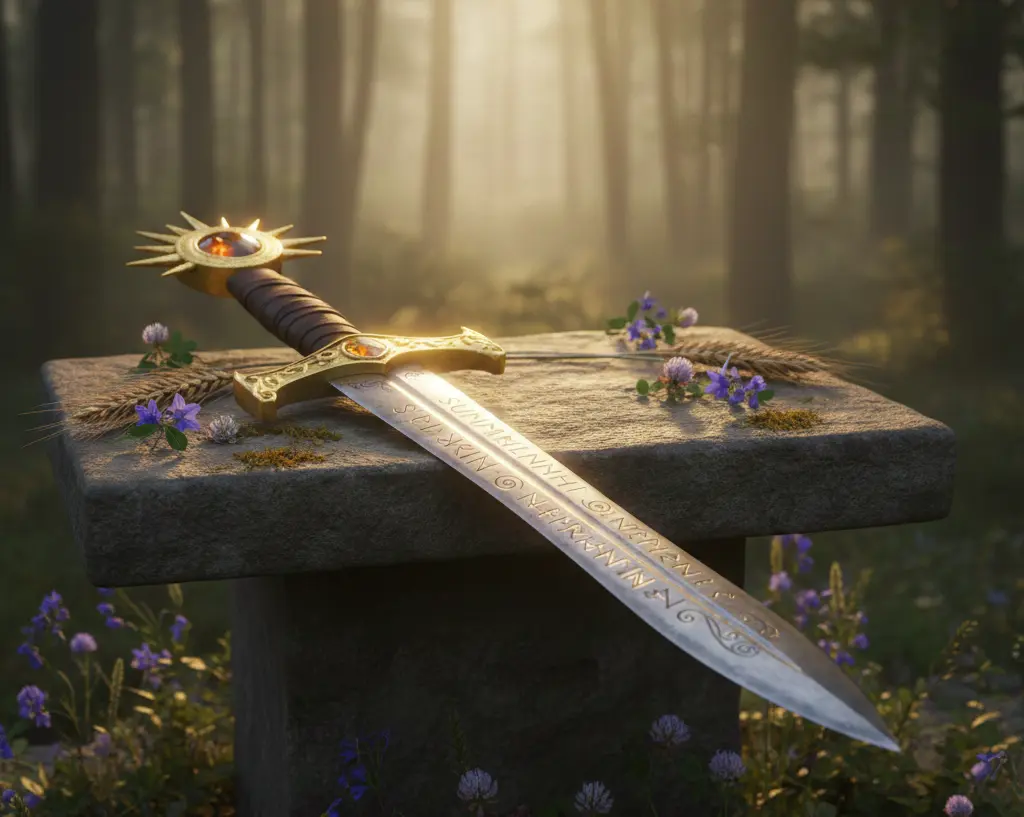
Freyr’s Sword — a magical sword belonging to the fertility god Freyr. Myth sources describe it as a sword capable of fighting on its own — meaning it would defend its owner even without a mortal wielder.
Freyr’s sword symbolizes divine protection and power balanced with peace and prosperity — reflecting Freyr’s role as a god of fertility, wealth, and well-being rather than war.
The myth also states that Freyr gave up this sword as part of a bargain to win the giantess Gerðr — a decision that, according to the mythic prophecy, will cost him dearly in the final battle of the gods.
FAQ: Viking Weapons
1. What was the most common Viking weapon?
The spear, closely followed by the axe, is generally considered the most common Viking weapon. Axes and spears were cheap to produce, required less iron, and appear in far more graves than swords.
2. Did every Viking have a sword?
No. Swords were elite weapons, often imported and carefully crafted, and are concentrated in rich burials and high-status contexts. Most free warriors likely carried spear + shield, with an axe or seax as secondary weapon.
3. How heavy were Viking weapons really?
Swords: roughly 1–1.5 kg, around 80–90 cm long – lighter and more agile than many modern replicas.
Shields: varying weights depending on thickness and wood, but designed for active use in shield walls rather than static “tower” defense.
Archaeological reproductions and museum tests consistently show Viking weapons were optimized for long hours of combat, not oversized fantasy props.
4. Were Viking bows actually used in battle or only for hunting?
Evidence says both. Excavated longbows and arrowheads, combined with historical references, demonstrate that archery was integrated into Viking warfare, especially in naval actions and skirmishing, while also being crucial for hunting.
5. What are the three most “iconic” Viking weapons to know?
Based on archaeological frequency, cultural status, and battlefield impact:
Spear – the default battlefield weapon and a core symbol in Norse myth.
Axe – from everyday tool to fearsome two-handed battle-axe, accessible to all social levels.
Sword – rare, prestigious, technologically advanced “premium tier.”
These three define the strategic mix of accessibility, status, and lethality in Viking warfare.
Explore Historically Accurate Viking Weapons
If you’re researching or sourcing Viking gear, understanding the difference between museum-based design and fantasy replicas is critical. Our collection is built using archaeological references, historical typologies, and materials aligned with authentic Viking-age construction.
Browse our latest Viking swords, axes, and spears to see how modern craftsmanship can meet historical standards.