
The Japanese Helmet and the Rising Sun (WW2 Japenese Helmet)
Introduction
Few military symbols are as instantly recognizable-or as debated-as Japan’s Rising Sun. particularly when examined alongside the WW2 Japenese Helmet, a defining piece of Imperial military equipment. When paired with the distinctive steel helmet of the Imperial Japanese military, the WW2 Japenese Helmet becomes a powerful entry point into understanding how symbolism, equipment design, and discipline intersected in World War II. This article takes an object-focused, politically neutral approach to examine the Japanese helmet, the Rising Sun emblem, and the broader material culture surrounding the WW2 Japenese Helmet used by the Imperial Japanese Army (IJA) and Navy (IJN). The goal is clarity, historical accuracy, and context-separating myth from documented practice.
From helmets and bayonets to boots, signals, and field behavior, Imperial Japan developed a military identity that was materially distinct from its Western counterparts. This distinction is especially visible when studying the WW2 Japenese Helmet, whose design choices reflected doctrine, ideology, and operational priorities rather than decoration alone.
The Rising Sun: Origin, Meaning, and Military Adoption
What the Rising Sun Symbol Was
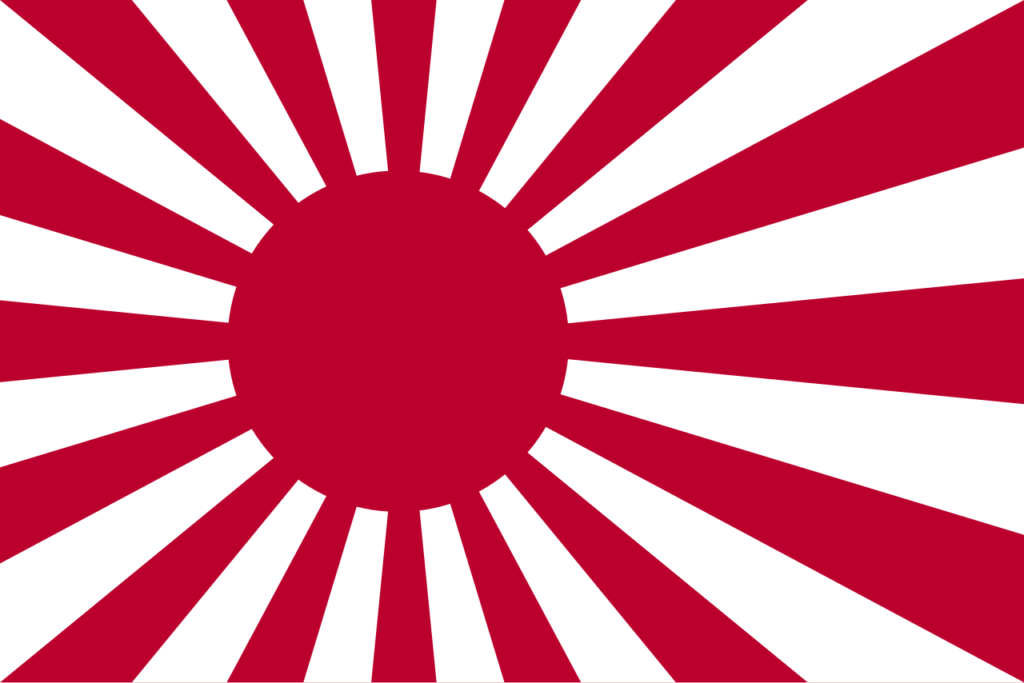
The Rising Sun (旭日旗, Kyokujitsu-ki) often referred to historically as the Rising sun flag, is a variant of Japan’s national sun disc motif, featuring red rays extending outward from a central sun. Its roots predate modern militarism, drawing from Shinto cosmology and Japan’s self-identification as the “Land of the Rising Sun.” The sun goddess Amaterasu occupies a central role in Japanese mythology, making solar symbolism culturally foundational rather than exclusively military, even when displayed alongside the WW2 Japenese Helmet in service contexts.
In formal terms, the Rising Sun flag was adopted by the Imperial Japanese Army in 1870 and by the Imperial Japanese Navy in 1889. It functioned as a war flag, distinct from the national flag (Hinomaru), and was used in military formations, naval ensigns, and ceremonial contexts. where soldiers wearing the WW2 Japenese Helmet were present.
What the Rising Sun Stood For
From a military standpoint, the Rising Sun represented:
Imperial authority: Direct loyalty to the Emperor, viewed as divine.
Continuity and destiny: The idea of Japan’s historical mission and endurance.
Collective identity: Subordination of the individual to the unit and state.
Unlike many Western military symbols, which emphasized regiments or nations, the Rising Sun explicitly tied the soldier’s identity to the Emperor. This ideological framing influenced not only insignia but also discipline, training, and battlefield conduct, associated with the WW2 Japenese Helmet and uniform system.
The Japanese Military Helmet: Design and Function
The Type 90 Helmet
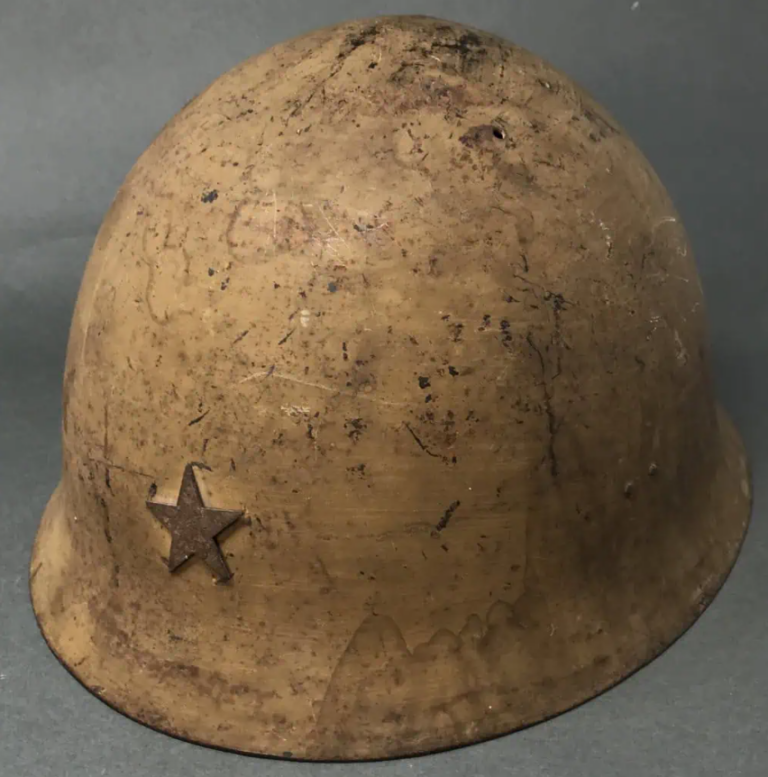
The most iconic Japanese helmet of World War II was the Type 90 steel helmet, introduced in 1930 and now widely identified as the WW2 Japenese Helmet. Superficially similar to European designs, the WW2 Japenese Helmet had several distinctive features:
Shape: A more domed profile with a pronounced brim.
Construction: Thin steel compared to German or American helmets, prioritizing weight reduction.
Interior: Leather or cloth liner systems designed for hot and humid climates.
Chinstrap: Often cloth or leather, secured differently than Western snap systems.
While less protective by late-war standards, the WW2 Japenese Helmet was optimized for mobility and endurance in jungle and island warfare. Helmets frequently bore unit markings, star insignia, or hand-painted identifiers rather than standardized decals, a trait shared across the Japenese world war 2 helmet category.
Helmets as Identity Carriers
Japanese helmets were not heavily used as propaganda surfaces. Instead, symbolism was embedded in uniform insignia and flags, reinforcing the idea that the soldier’s body rather than his equipment was the vessel of loyalty. This philosophy directly shaped how the WW2 Japenese Helmet and the broader Japenese world war 2 helmet system were perceived and utilized, contrasting with German practices of prominent helmet insignia.
Three Notable Rising Sun Mentions in World War II
1. Naval Ensigns at Pearl Harbor (1941)
During the attack on Pearl Harbor, Imperial Japanese Navy vessels flew the Rising Sun naval ensign. Photographic and eyewitness records confirm its presence on warships and aircraft carriers. Here, the symbol functioned as a formal state identifier rather than a psychological warfare tool.
2. Infantry Standards in the Pacific Campaign
Japanese infantry units often carried small Rising Sun flags or banners, especially during early Pacific campaigns. These were not mass-issued battlefield flags but personal or unit-level items used to reinforce morale and cohesion.
3. End-of-War Surrenders and Trophy Items
After Japan’s surrender in 1945, Rising Sun flags became common war trophies collected by Allied soldiers. Many surviving examples include handwritten messages from family members, indicating their dual role as military and personal objects.
Imperial Japanese Uniforms: Form, Function, and Philosophy
Standard Army Uniforms
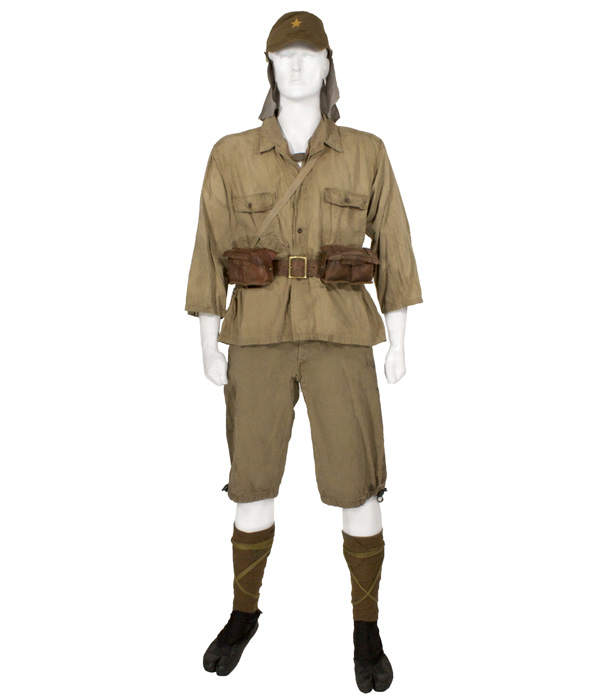
The typical IJA uniform was practical, subdued, and climate-adapted:
Color: Khaki or olive drab, with variations based on theater.
Fabric: Cotton or wool blends, lighter than European equivalents.
Insignia: Rank displayed on collars rather than shoulders.
Headgear: Field caps remained common even in combat.
Uniform design prioritized uniformity over individual distinction. Medals were rarely worn in the field, reinforcing the ethos of collective service.
Boots and Footwear
Japanese infantry boots were ankle-high leather boots with hobnails or rubber soles. In jungle theaters, soldiers frequently used split-toe tabi boots or improvised footwear. Compared to American double-buckle boots, Japanese footwear was lighter but less durable.
This trade-off reflects a broader pattern: endurance and adaptability were valued over long-term equipment lifespan.
Bayonets and Close-Combat Doctrine
The Type 30 Bayonet
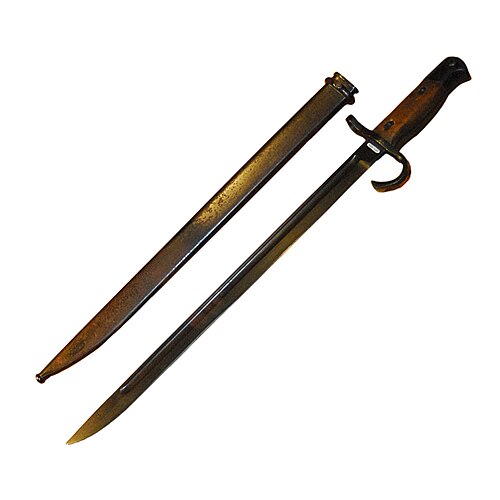
The Type 30 bayonet, introduced in 1897, remained in service through World War II with minimal changes. It was long, straight, and sword-like, reflecting Japan’s emphasis on bayonet training.
Key characteristics included:
Long blade optimized for reach.
Simple wooden grips.
Compatibility with multiple rifle models.
Bayonet training was central to Japanese infantry doctrine. Soldiers were trained to close distance aggressively, particularly in night attacks. This doctrinal emphasis distinguished Japanese forces from Allied armies, which increasingly relied on firepower and combined arms.
Signals, Coordination, and Battlefield Conduct
Communication Methods
Imperial Japanese units relied heavily on:
Bugle calls for commands.
Flag and hand signals for coordination.
Runners rather than radios at lower levels.
While this limited flexibility, it reduced dependence on fragile technology in difficult terrain. The downside was slower adaptation in fluid engagements.
How They Carried Themselves in War
Japanese soldiers were trained to project discipline and resolve. Observers frequently noted:
Strict posture and formation discipline.
Minimal verbal communication.
Willingness to endure hardship without complaint.
This conduct was shaped by military education, which blended modern tactics with samurai-influenced ethical ideals such as giri (duty) and on (obligation). Importantly, these behaviors were institutional expectations, not spontaneous cultural traits.
Equipment Discipline and Field Maintenance Practices
Beyond weapons and uniforms, the Imperial Japanese military emphasized strict equipment discipline and personal responsibility for issued gear. Maintenance was treated as a matter of discipline rather than logistics, reinforcing self-reliance during extended operations.
Key characteristics included:
Personal accountability
Rifles, bayonets, helmets, and boots were maintained by individual soldiers. Neglect was viewed as a failure of discipline, reducing reliance on replacement systems.Routine maintenance practices
Cleaning and inspection followed standardized routines, often conducted daily, even in combat zones. Function took priority over appearance.Limited dependence on resupply
Doctrine assumed prolonged operations with minimal logistical support. Soldiers carried lighter loads and fewer spares, preserving equipment through care and repair.Field adaptation
Helmets were wrapped or covered to reduce glare and noise. Boots and uniforms were repaired or modified using available materials, driven by practical fieldcraft rather than regulation.
This approach supported endurance and cohesion but exposed structural limits. As supply lines deteriorated, individual discipline could not compensate for industrial shortages. For historians, surviving equipment marked by wear and repair offers direct insight into how doctrine translated into battlefield reality.
What Imperial Japan Did Differently
From a comparative military analysis, three structural differences stand out:
Ideology integrated into training: Loyalty to the Emperor was operationalized, not symbolic.
Equipment optimized for environment: Lightweight gear prioritized mobility over protection.
Close-combat emphasis: Bayonets and night attacks were doctrinal, not situational.
These choices delivered early operational success but proved less effective against industrial-scale Allied warfare later in the conflict.
Conclusion
The Japanese helmet and the Rising Sun are not merely artifacts; they are gateways into understanding how Imperial Japan viewed war, identity, and duty. Through helmets, uniforms, bayonets, boots, and signals, the Imperial Japanese military expressed a coherent-if rigid – philosophy of combat.
Explore Historically Accurate Military Gear Inspired by Real Research
Understanding military history begins with authentic equipment. From helmets and bayonets to uniforms and field gear, every detail reveals how doctrine, environment, and identity shaped soldiers across different eras.
At Doon Handicrafts, we design historically inspired replicas based on documented sources, archaeological references, and museum-grade research—built for collectors, reenactors, and institutions seeking accuracy and durability.
 Browse our World War and historical military collection to discover gear that brings history to life.